
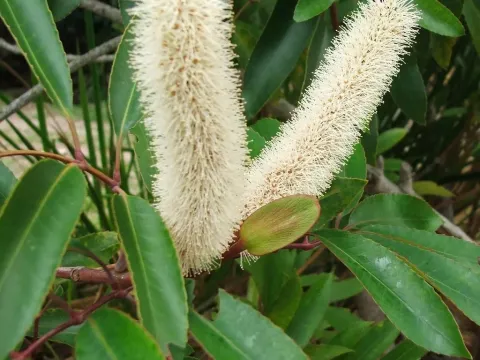
Cunonia
Cunonia
Cunonia is a genus of evergreen trees and shrubs belonging to the Cunoniaceae family. The most prominent species, Cunonia capensis, is native to the coastal forests and riverbanks of South Africa, where it thrives in humid and temperate environments.
What the section contains

Cunonia
The plant requires fertile, well-drained soil rich in organic matter. While it prefers moist conditions, it is sensitive to waterlogging, which necessitates careful soil management and good drainage systems if grown in containers or areas with heavy clay soil.
Climate preferences for Cunonia are strictly subtropical. It requires protection from frost and severe cold, making it a popular choice for conservatory or greenhouse cultivation in cooler regions, while it can be planted outdoors in frost-free climate zones.
Agricultural techniques include consistent irrigation, particularly during active growth phases. Mulching around the base of the plant can help retain soil moisture and stabilize the root temperature during hotter months of the year.
Host use of Cunonia is primarily ornamental. It is highly valued for its striking dark green pinnate leaves and dense, bottlebrush-like white flowers that bloom in summer, making it an excellent specimen for landscaped gardens and park designs.
Common pests affecting Cunonia include scale insects and aphids, which tend to infest the tender new growth. Regular monitoring is essential to prevent infestations from spreading and damaging the plant's overall aesthetic appeal.
Root rot, caused by various soil-borne fungi, remains the most significant threat to plant health. This condition is usually a result of poor soil aeration or excessive watering in low-light, cool conditions.
To maintain plant vitality, it is advised to perform light pruning after the flowering season. This process removes spent blossoms and any potentially infected branches, ensuring the plant allocates energy to healthy growth.
Ensuring proper spacing between plants is crucial if Cunonia is used in hedge formation to avoid microclimate issues such as excessive humidity which encourages fungal growth.
If growing in pots, the soil should be refreshed periodically to ensure the plant continues to receive adequate nutrients, as nutrient deficiency can lead to chlorosis and increased susceptibility to opportunistic pests.