
Anthracnose
Colleotrichum gloeosporioides
Description
Symptoms
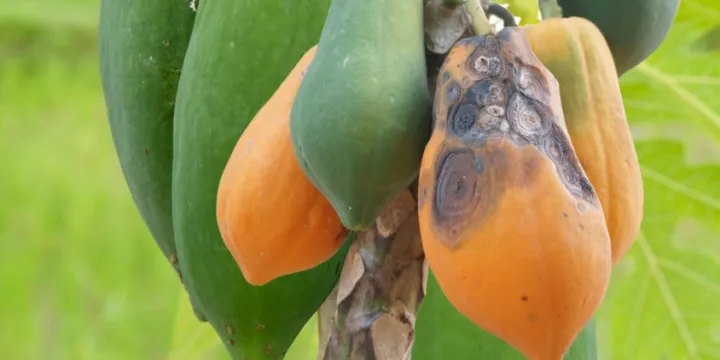
The primary external signs of infection are dark, sunken spots of irregular or round shape that appear on leaves, stems, fruits, and branches of infected plants.
In the center of the affected areas, spore pads known as acervuli eventually form, often displaying a pink or salmon-colored coating under high humidity conditions.
When stems are affected, anthracnose often causes deep lesions that can encircle the shoot, leading to the wilting and eventual death of the entire upper part of the affected organ.
On fruits, the disease manifests as rot that develops rapidly during maturation, rendering the produce unsuitable for long-term storage or processing.
In cases of severe infestation, the plant's foliage turns yellow prematurely, curls, and falls off, which significantly reduces the crop's overall photosynthetic area.
Pathogen
The causative agent of the disease is the imperfect fungus Colletotrichum gloeosporioides, belonging to the class Deuteromycetes. This pathogen has a wide specialization and affects both herbaceous and woody plants worldwide.
The fungus is capable of surviving in plant debris, seeds, and soil as mycelium or conidia. In the pathogen's life cycle, the formation of acervuli—specific fruiting bodies where a vast number of spores are produced—plays a crucial role.
The pathogen's activity is closely linked to its ability to secrete enzymes that break down host cell walls, allowing it to colonize tissues rapidly. Infection transmission occurs via rain splashes, wind, and insect vectors.
For many tropical and subtropical crops, such as Coffea arabica and Coffea congensis, this fungus is a dominant pathogen causing significant harvest losses.
Hemp (Cannabis sativa) is also susceptible to infection by this fungus, leading to a reduction in fiber quality and seed material when agrotechnical standards are violated under high-humidity conditions.
Conditions for development
Disease development is most intensive at temperatures ranging from +20 to +28 degrees Celsius, which are optimal for the germination of the pathogen's conidia.
The key factor for spread is high relative humidity, exceeding 80%, or the presence of liquid moisture on plant surfaces for extended periods.
Frequent rainfall during the flowering and fruit-setting stages triggers disease outbreaks, as water serves as the primary vector for transporting spores from primary infection sites.
Dense planting and a lack of proper ventilation within agroecosystems create a favorable microclimate for mycelium germination and the rapid spread of the disease across the plantation.
Plants weakened by nutrient deficiencies or pest stress become more vulnerable to infection penetration.
Why it matters
The harmfulness of anthracnose lies in a significant reduction in the productivity of affected crops, which can range from 20 to 80 percent of the total harvest volume.
In coffee trees, the disease causes flower and fruit drop, as well as branch necrosis, leading to gradual exhaustion and death of the plant.
Hemp infection leads to a loss of fiber strength and reduced seed yield, making industrial processing economically unviable.
Affected produce loses its marketability, becomes prone to secondary infections, and rots during transport, preventing potential export opportunities.
The accumulation of the pathogen in soil and plant debris poses risks for subsequent seasons, necessitating drastic changes in crop rotation and costly sanitation methods.
Protection
The primary measure is the use of healthy, certified seed material that is free from Colletotrichum gloeosporioides spores.
Adhering to crop rotation by excluding species susceptible to anthracnose for 3–4 years significantly lowers the infectious background of the field.
- Spatial isolation of crops
- Timely deep plowing of plant residues
- Balanced application of potassium-phosphorus fertilizers
- Regular pruning and destruction of infected shoots
- Application of systemic and contact fungicides
Chemical protection involves the use of copper-based preparations for prevention and systemic fungicides (such as triazoles or benzimidazoles) upon the appearance of initial symptoms.
An important practice is controlling humidity levels by improving soil drainage and organizing proper planting patterns to ensure adequate air circulation around the plants.
Pathogens and affected parts
Affects crops · 3
Discussion
No discussions yet — be the first.