
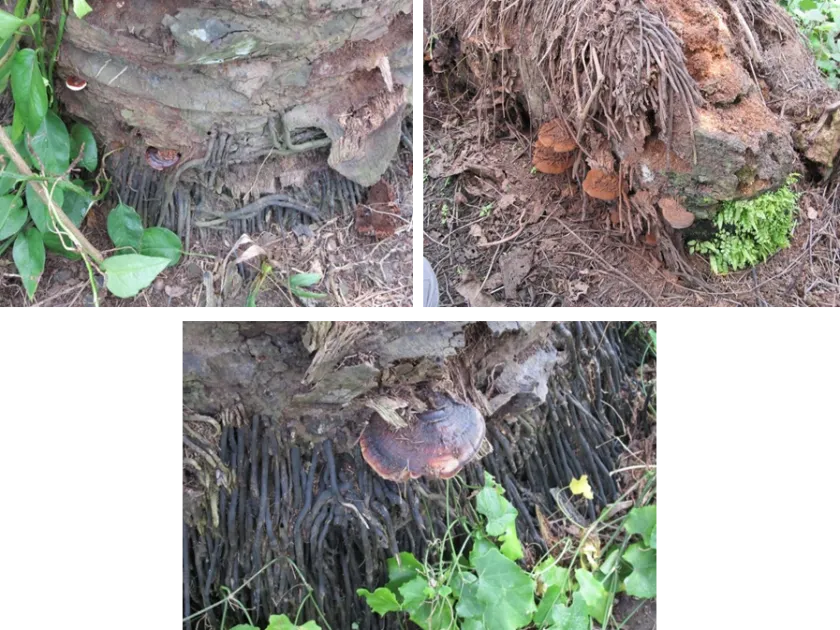
Description
Symptoms
Early symptoms include a noticeable decline in plant vigor, followed by chlorosis (yellowing), wilting of the foliage, and premature leaf drop.
A diagnostic sign of the infection is the presence of reddish-brown mycelial mats covering the surface of the root system, which can be observed upon careful inspection.
When infected roots are cut, the internal tissue often displays signs of rot, characterized by a brown, spongy appearance and structural instability.
In advanced stages of the disease, characteristic fruiting bodies of the fungus may appear at the base of the stem or on exposed root parts near the soil surface.
The plant eventually suffers from complete hydraulic failure as the root system loses its ability to uptake water and nutrients, resulting in total mortality.
Pathogen
The causal agent of red root rot is the basidiomycete fungus Ganoderma philippi. It is a highly destructive pathogen known for attacking the root systems of various woody and herbaceous perennials.
The fungus resides in the soil, forming mycelial strands that invade the bark and cambium of plant roots. It produces potent enzymes that degrade wood tissues, leading to rapid decay.
The disease persists in the soil for years, utilizing decaying roots and organic matter as a primary energy source until it contacts a susceptible host.
It impacts diverse crops globally, with significant economic damage documented in coffee species such as Coffea arabica and Coffea canephora, as well as in maize.
Dissemination occurs primarily through physical contact between healthy roots and infected organic material, as well as via spores transported by wind or water.
Conditions for development
High soil moisture and poor drainage conditions are primary drivers that favor the rapid growth and spread of the Ganoderma philippi mycelium.
Warm tropical climates significantly enhance the metabolic activity of the fungus, allowing it to colonize new hosts more aggressively throughout the year.
Disturbances to the root zone, such as those caused by cultivation or weeding, provide entry points for the pathogen to infect susceptible plant tissues.
High densities of host plants or the failure to clear infected debris from previous crop cycles create reservoirs that facilitate ongoing infection cycles.
Poor soil aeration and stagnant water conditions further exacerbate the disease, creating an environment where the fungus outcompetes beneficial soil microorganisms.
Why it matters
Red root rot is highly destructive, leading to extensive plant death and significant yield losses in commercial plantations and agricultural fields.
The disease spreads in an expansive manner, often creating large gaps in fields as it moves from one plant to the next through the soil-root interface.
Economic consequences are severe due to the loss of long-term investments in perennial crops and the substantial costs associated with soil remediation.
Once established, the pathogen is extremely difficult to eliminate, often necessitating long fallow periods or the abandonment of the affected plot.
The impact is compounded by the pathogen's ability to remain dormant in the soil, posing a permanent threat to any susceptible replanting efforts.
Protection
The primary control measure involves the systematic identification, removal, and destruction of infected plants along with their entire root systems.
Thorough cleaning of the affected soil to remove all fragments of roots and organic debris is essential to minimize the inoculum level in the field.
Improving soil structure, promoting adequate drainage, and avoiding waterlogging are vital cultural practices to discourage fungal colonization.
The establishment of physical barriers or isolation trenches around infected patches can effectively prevent the fungus from spreading to neighboring healthy plants.
Integrated management should focus on the use of resistant varieties and strict adherence to quarantine protocols to prevent the introduction of the pathogen to new areas.
Pathogens and affected parts
Affects crops · 3
Discussion
No discussions yet — be the first.