
Coelogyne swaniana
Coelogyne swaniana
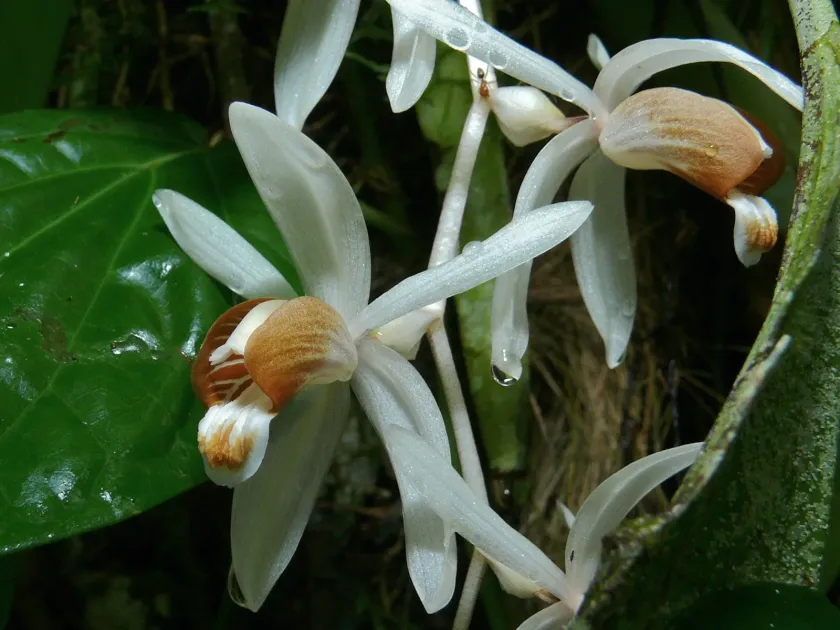
Description
Growing requirements
Coelogyne swaniana is a fascinating species belonging to the Orchidaceae family, native to the tropical forests of Southeast Asia. As an epiphytic plant, it typically grows on branches and tree trunks, relying on high humidity and ambient air moisture for its survival.
Successful cultivation requires a stable temperature range between 18°C and 25°C. To ensure a healthy blooming cycle, it is essential to provide a slight drop in nighttime temperatures, which triggers the formation of flower spikes and strengthens the plant's metabolism.
The light requirements for this species are specific: it thrives under bright, filtered light. Protecting the leaves from harsh, direct sunlight is crucial, as this can cause significant tissue damage. East-facing windows with light curtains are often the best location for this orchid.
A specialized orchid substrate is vital for the development of Coelogyne swaniana. A well-draining mixture of fir bark, charcoal, and perlite ensures that the roots are adequately aerated while maintaining the necessary moisture levels without causing water stagnation.
Watering should be approached with caution, following the principle of wetting the medium thoroughly and allowing it to dry out slightly between cycles. Overwatering is the most common mistake, often leading to the suffocation of the delicate root system.
Main diseases and pests
Spider mites represent a major threat to Coelogyne swaniana, especially in indoor environments with low humidity. These pests thrive in dry conditions and can quickly weaken the plant by feeding on the sap of the leaves and pseudobulbs, leaving behind characteristic yellow spots.
Scale insects are another common concern, often hiding in the crevices of the bulbs or along the leaf veins. Physical removal using a cotton swab dipped in rubbing alcohol is an effective control method for minor infestations, preventing the spread across the collection.
Root rot, driven by excessive moisture and poor drainage, remains the primary threat to the long-term survival of the orchid. Symptoms include soft, blackened roots and discolored bulbs, requiring immediate repotting and the removal of all compromised tissues.
Fungal leaf spot diseases may develop if the plant is kept in an environment with poor air circulation and high stagnant humidity. Improving ventilation around the orchid is the most effective preventative measure against these types of infections.
Maintaining high standards of plant hygiene is essential for the health of Coelogyne swaniana. Regularly disinfecting tools, removing dead leaves, and isolating new additions to the collection are standard agricultural practices that protect the plant from outbreaks.