
Coelogyne cobbiana
Coelogyne cobbiana
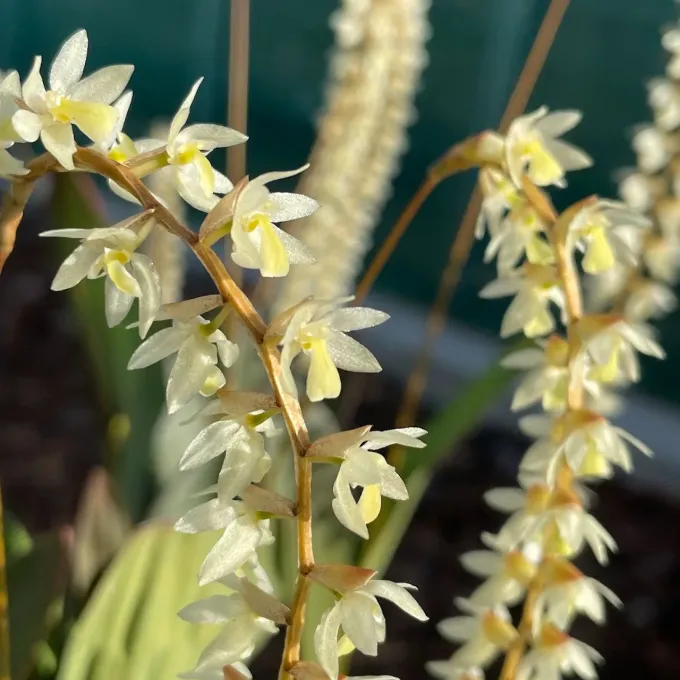
Description
Growing requirements
Coelogyne cobbiana is a fascinating epiphytic orchid species belonging to the family Orchidaceae. Native to the tropical regions of Southeast Asia, specifically the Philippines, this plant is adapted to high-humidity forest environments where it thrives as an epiphyte on tree trunks.
Botanically, this species is defined by its sympodial growth habit, consisting of pseudobulbs that develop in clusters. The leaves are leathery, lanceolate, and deep green, contributing to the structural elegance of the plant throughout the growing season.
To cultivate this orchid successfully, provide bright, filtered light. Direct sun can cause leaf scorch, while too little light will inhibit blooming. Maintaining a stable temperature range with a noticeable night-time drop is crucial to triggering flower spike development.
The substrate must be highly porous to ensure healthy root development. A mix consisting of pine bark, charcoal, and sphagnum moss is recommended to balance moisture retention with necessary air circulation, preventing the roots from suffocating in heavy, compact soil.
Watering management is key for the health of the plant. During the active growing period, keep the medium consistently moist but never waterlogged. Use only low-mineral water to avoid salt buildup, which is detrimental to the sensitive root system of this species.
Main diseases and pests
Common pests encountered during the cultivation of Coelogyne cobbiana include spider mites and scale insects. These pests feed on the plant's juices, leading to chlorosis and stunted growth; regular visual inspections are vital for early detection and manual or chemical intervention.
Fungal rots are frequent challenges when air circulation is poor or humidity remains static for too long. To minimize risks, ensure the growing environment is well-ventilated and avoid water accumulation in the new growth, which can lead to rapid decay of the pseudobulbs.