
Coelogyne corymbosa
Coelogyne corymbosa
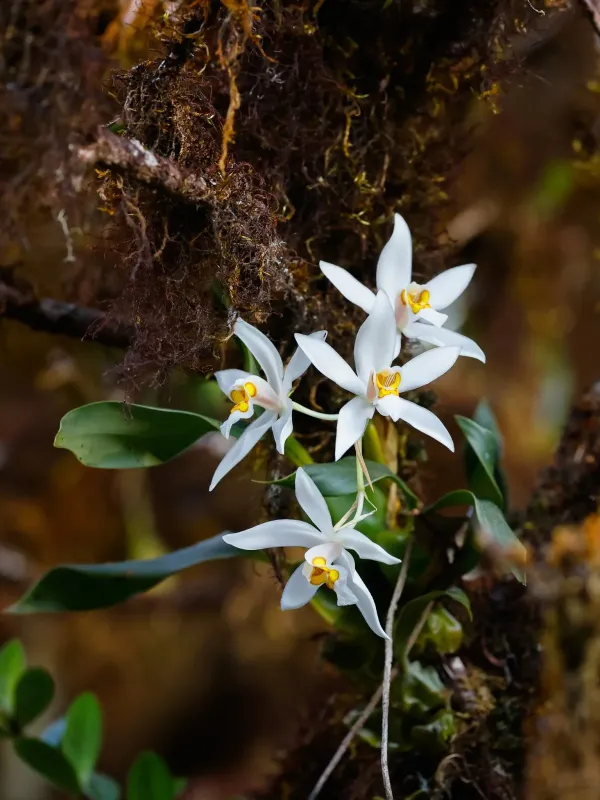
Description
Growing requirements
Coelogyne corymbosa is a distinguished species within the Orchidaceae family, known for its elegant white flowers and specific growth patterns. This orchid is native to the high-altitude cloud forests of the Himalayas and parts of Southeast Asia, where it thrives in cool, humid conditions.
The plant exhibits a sympodial growth habit, featuring distinct, clustered pseudobulbs that store water and nutrients. Its foliage is lanceolate and leathery, providing a lush appearance that persists throughout the year, even when the plant is not in bloom.
Successful cultivation requires mimicking its natural montane environment. This includes providing bright, indirect light and a significant drop in temperature during the night. High humidity levels are essential, though airflow must be maintained to prevent respiratory issues for the plant.
The potting medium must be exceptionally well-draining, typically consisting of medium-grade fir bark, charcoal, and perlite. Because this species is sensitive to mineral buildup, irrigation should ideally be performed with filtered or rain water to preserve root health.
In terms of agricultural and horticultural use, this species is primarily valued as a specimen plant for hobbyist collections and botanical gardens. It is highly regarded for its visual appeal and the delightful, sweet fragrance produced by its blossoms.
Main diseases and pests
The primary pests affecting Coelogyne corymbosa are spider mites and scale insects, particularly in environments with poor ventilation or low humidity. Regular monitoring is essential to ensure these pests do not colonize the pseudobulbs.
Root rot remains the most common ailment, usually caused by overwatering or using a degraded, compact substrate. If signs of rot appear, it is imperative to repot the plant immediately into fresh media and remove any necrotic tissue with sterilized tools.