
Coelogyne asperata
Coelogyne asperata
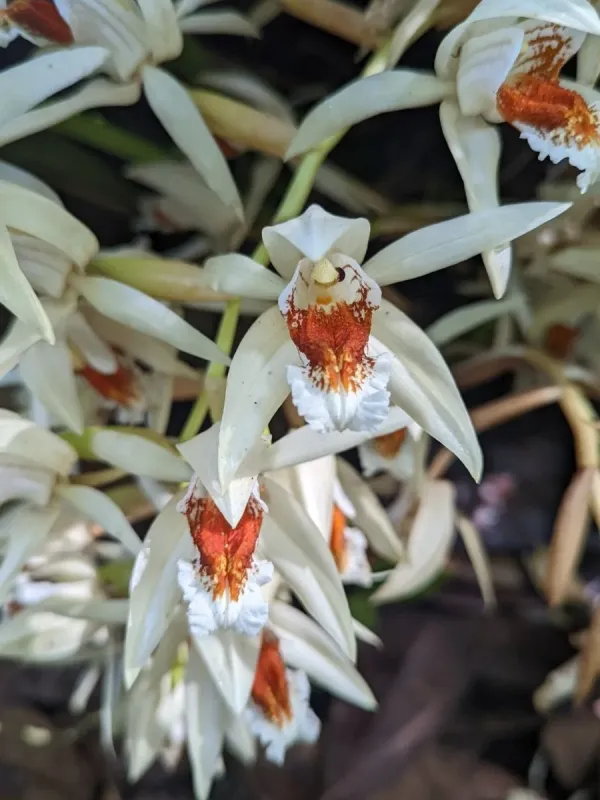
Description
Growing requirements
Coelogyne asperata is a robust epiphytic orchid belonging to the Orchidaceae family. Native to the tropical regions of Southeast Asia, this species thrives in humid lowland forests, often establishing itself on high tree branches where it receives filtered light.
Cultivation requires maintaining a warm and humid environment throughout the year. The temperature should be kept between 22°C and 28°C. Dropping below 15°C for extended periods can cause stress and inhibit the flowering potential of the pseudobulbs.
The potting medium must be exceptionally well-draining. A mix consisting of medium-grade bark, charcoal, and horticultural perlite is standard. Since it is an epiphyte, the roots require excellent aeration to prevent rot caused by stagnant water or compacted media.
Light intensity should be moderate, mimicking the dappled sunlight of a canopy. Direct midday sun will cause yellowing and scorching of the foliage, while insufficient light will lead to weak vegetative growth and a lack of inflorescence development.
Watering must be generous during the growing season. While the plant does not have a strict dormancy period, water frequency should be reduced during shorter winter days. The humidity levels should remain high, typically facilitated by greenhouse misting systems or humidity trays.
Main diseases and pests
Common pests include scale insects and spider mites, which can proliferate quickly in dry indoor air. Routine inspection of the pseudobulbs and leaves is critical to catch infestations before they cause significant damage to the plant tissue.
Fungal rots, such as root rot and stem rot, are the most frequent health risks associated with poor drainage. Applying appropriate fungicides at the first sign of discoloration is necessary, followed by a reassessment of the watering and potting schedule.