
Coelogyne flaccida
Coelogyne flaccida
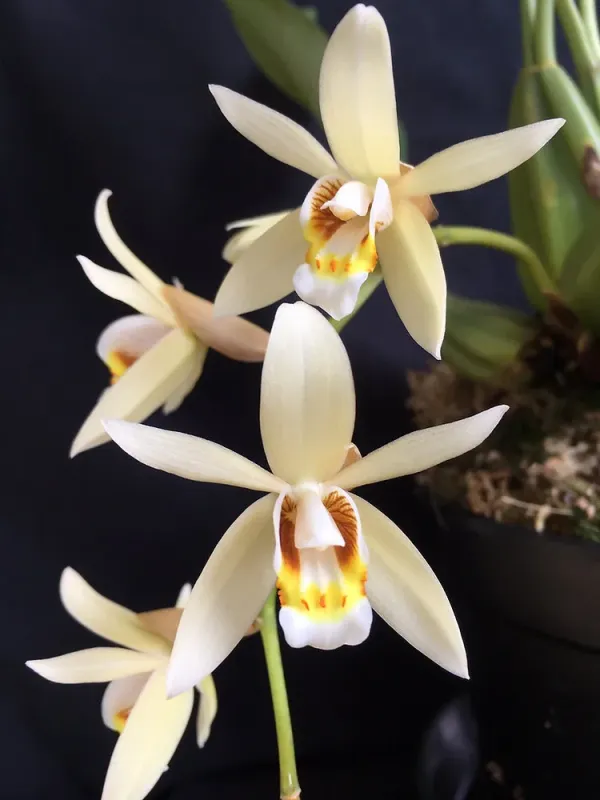
Description
Growing requirements
Coelogyne flaccida is a striking epiphytic orchid species belonging to the Orchidaceae family. Its native range spans across the Himalayas, India, and Southeast Asia, where it thrives in moist, high-altitude mountain forests on tree branches.
Cultivation requires a cool to intermediate temperature regime. It is essential to maintain daytime temperatures between 20°C and 25°C, while providing a significant temperature drop at night to 12°C–15°C, which is necessary for healthy vegetative growth and successful blooming.
The potting medium must be highly porous and well-draining. A mix consisting of medium-grade bark, charcoal, and perlite works best to simulate the natural epiphyte environment and ensure that the root system has access to consistent air circulation.
Lighting should be bright but filtered. Direct midday sun can easily scorch the foliage, so maintaining a balance of light is crucial. During the winter months, supplemental lighting is often beneficial to support the plant's metabolic processes in regions with short daylight hours.
Watering should be consistent throughout the active growing season. The plant prefers the substrate to dry out slightly between waterings, but it should never be allowed to dehydrate completely. High humidity levels are vital for maintaining the health of the pseudobulbs.
Main diseases and pests
Common pests affecting this orchid include spider mites and scale insects. These organisms thrive in dry environments, making regular monitoring of leaf undersides and maintaining adequate humidity levels the best preventative measures against infestations.
Root rot remains the most common threat to the health of Coelogyne flaccida. This issue is typically caused by poor drainage or overwatering. Proper management involves using specialized pots with multiple drainage holes and ensuring the medium is not compacted, allowing roots to breathe.