
Coelogyne breviscapa
Coelogyne breviscapa
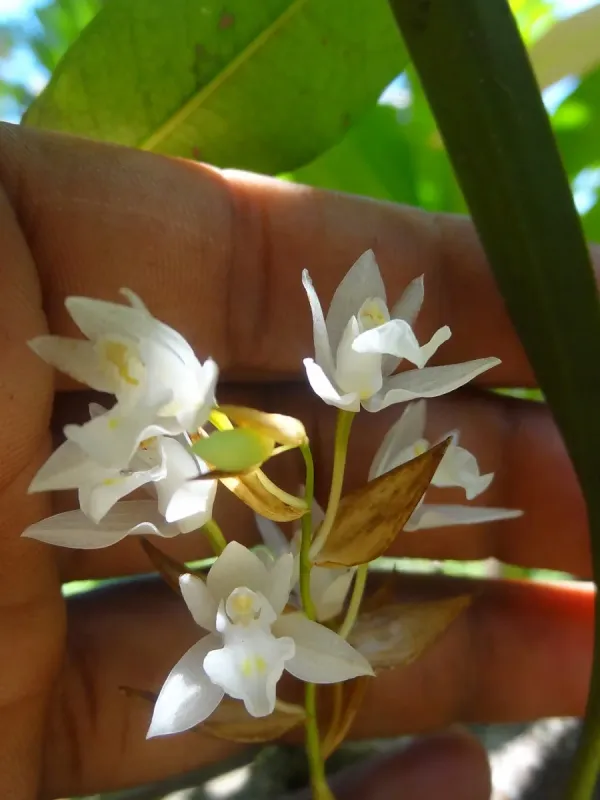
Description
Growing requirements
Coelogyne breviscapa is a perennial epiphytic species belonging to the Orchidaceae family. Native to the mountainous regions of India, specifically the Western Ghats, this orchid thrives in cool, humid, and misty forest environments.
Temperature management is critical for the success of this species. It requires a cool-intermediate climate with daytime temperatures ranging from 18°C to 24°C and a significant nocturnal temperature drop to encourage healthy growth and spiking.
The planting substrate must provide excellent drainage and aeration. A mixture of pine bark, charcoal, and perlite is commonly used to ensure that the root system receives oxygen while retaining sufficient moisture.
Light requirements for this orchid include bright, filtered light. Protecting the plant from direct sunlight is essential to prevent leaf scorching, which can weaken the plant and make it susceptible to opportunistic pathogens.
Watering should be consistent throughout the active growing season. Using water with low mineral content is recommended. During the winter months, watering should be reduced to prevent root rotting while maintaining a baseline humidity level.
Main diseases and pests
Spider mites are the most common pests affecting this species in indoor or greenhouse conditions. They thrive in dry air, so maintaining proper humidity is a vital cultural control method against these invaders.
Scale insects can also colonize the pseudobulbs and leaf bases. Regular monitoring and manual removal, followed by the application of horticultural soap or systemic insecticides, are necessary to control populations.
Root rot, typically caused by waterlogged medium or poor airflow, is a significant threat to Coelogyne breviscapa. If rot is detected, the affected parts must be removed and the plant repotted in fresh, sterile medium.
Bacterial soft rot can occur if water remains trapped in the center of new growth. Improving air circulation with fans and ensuring that water is not left on leaves overnight are primary prevention strategies.
Fungal leaf spot diseases may appear during periods of high humidity and stagnation. Maintaining a clean environment and implementing a preventive fungicide program can help preserve the health and vigor of the orchid.