
Coelogyne pulverula
Coelogyne pulverula
Description
Growing requirements
Coelogyne pulverula is an epiphytic orchid species belonging to the Orchidaceae family. It is native to the tropical forests of Southeast Asia, specifically regions across Malaysia, Borneo, and Sumatra, where it grows in high-humidity canopy environments.
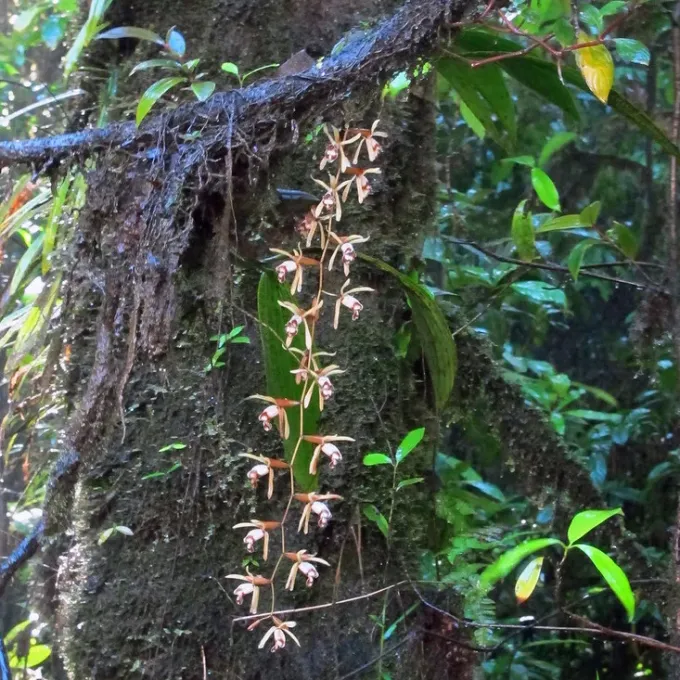
The plant is known for its impressive, long, pendant inflorescences that can carry numerous small, fragrant flowers. Its pseudobulbs are closely clustered, and the foliage consists of long, lanceolate leaves that maintain a deep green color under proper care.
Optimal growth requires a well-draining epiphytic substrate, primarily composed of pine bark, charcoal, and perlite. Maintaining high atmospheric humidity is crucial for the health of this species, often requiring misting or the use of humidifiers in indoor settings.
Temperature requirements are consistent with tropical conditions, favoring moderate temperatures between 20°C and 26°C. Bright, indirect light is necessary to stimulate annual blooming, as insufficient light levels will prevent the development of flower spikes.
The commercial and hobbyist significance of Coelogyne pulverula lies in its high ornamental value. It is widely prized among orchid enthusiasts for its unique aesthetic, particularly the dramatic cascading flower sprays that make it a standout specimen in any greenhouse collection.
Main diseases and pests
Pest management is vital, as the plant is susceptible to common orchid pests such as spider mites, thrips, and scale insects. Regular inspection of the undersides of leaves and the pseudobulbs helps identify early infestations.
Bacterial spotting and root rot are the primary threats caused by poor air circulation and excessive substrate moisture. Ensuring proper ventilation and allowing the growing medium to approach dryness between waterings significantly reduces the risk of these pathogens.