
Coelogyne multiflora
Coelogyne multiflora
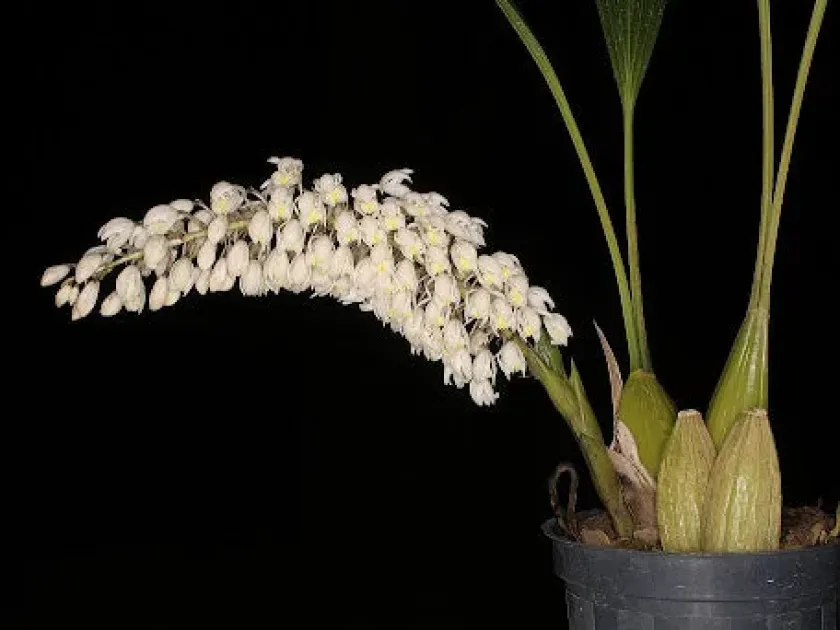
Description
Growing requirements
Coelogyne multiflora is an epiphytic orchid species belonging to the Orchidaceae family. Native to the mountain forests of Sulawesi, Indonesia, this plant is well-known for its impressive, multi-flowered inflorescences that emerge from the base of the pseudobulbs.
To cultivate this species successfully, growers must maintain a consistent temperature range between 18 and 26 degrees Celsius. High atmospheric humidity, ranging from 60 to 80 percent, is essential to mimic the plant's natural cloud forest habitat.
Regarding light requirements, the plant prefers bright, filtered sunlight. Excessive exposure to direct sun should be avoided as it can cause chlorophyll degradation and severe leaf burn, ultimately weakening the plant's metabolic functions.
The substrate must be designed to facilitate rapid drainage and excellent aeration for the root system. A high-quality medium typically consists of orchid-grade fir bark, charcoal, and perlite, which prevents the roots from remaining damp for too long.
Watering practices are crucial, especially during the active growing season. It is best to water the plant thoroughly until the substrate is saturated, then allow it to dry out slightly before the next irrigation cycle, avoiding prolonged water stagnation.
Main diseases and pests
The most common pests affecting this orchid are spider mites and aphids, which thrive in low-humidity environments. Regular inspection and cleaning of the foliage with a damp cloth or specialized horticultural soaps are recommended.
Pathogenic fungi can cause severe damage if the ventilation is insufficient or if the substrate stays saturated for extended periods. If rot appears, the affected areas must be removed immediately, followed by the application of a systemic fungicide.