
Coelogyne mayeriana
Coelogyne mayeriana
Description
Growing requirements
Coelogyne mayeriana is a distinct epiphytic orchid species belonging to the Orchidaceae family. It is native to the tropical forests of Southeast Asia, specifically found in regions across Indonesia, Malaysia, and Borneo, where it thrives in high-humidity environments.
Successful cultivation requires a warm and stable climate. The plant prefers temperatures ranging from 20 to 28 degrees Celsius throughout the year. It is sensitive to sudden temperature shifts and cold drafts, which can cause significant physiological stress to the plant.
Humidity is a critical factor for the health of this species. Ideally, it should be kept between 70% and 80%. Growers often utilize misting systems or dedicated grow-tents to replicate the natural, moisture-rich conditions of its native jungle canopy.
For optimal root health, the potting medium must provide excellent aeration. Epiphytic-grade pine bark, supplemented with charcoal and sphagnum moss, is the standard choice. Proper drainage is essential, as the roots must be kept moist but never waterlogged.
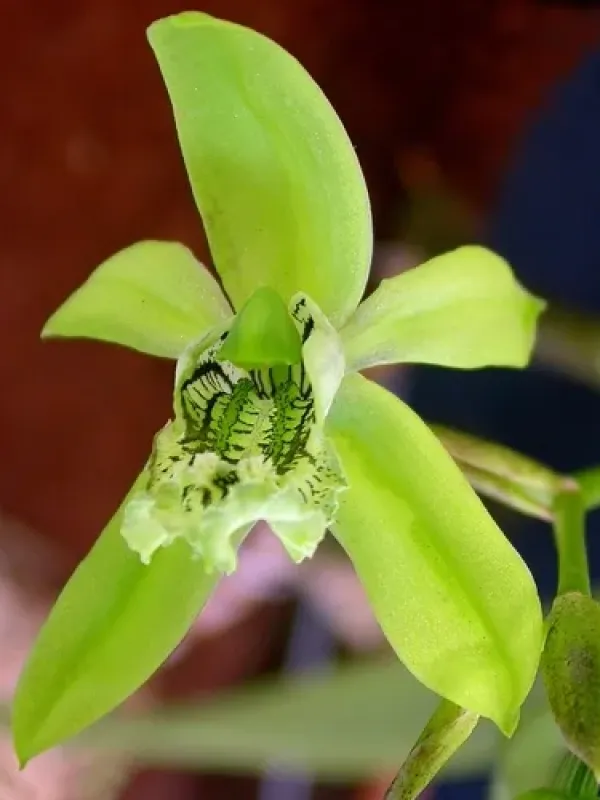
This orchid is primarily used for ornamental and botanical purposes. It is highly prized by orchid enthusiasts for its unique, drooping flower spikes and the striking contrast between its green sepals and the dark markings on its labellum.
Main diseases and pests
Common pests affecting Coelogyne mayeriana include spider mites and scale insects. These pests often appear when the ambient humidity is too low. Regular monitoring and the use of neem oil or targeted insecticidal soaps are recommended for management.
Pathogenic threats usually involve fungal root rot or bacterial leaf spots caused by stagnant air and excessive moisture in the substrate. Maintaining good airflow is the most effective preventative measure against these infections.