
Cochemiea albicans
Cochemiea albicans
Description
Growing requirements
Cochemiea albicans belongs to the Cactaceae family. In the wild, this species is endemic to Mexico, growing primarily on Santa Margarita Island and the adjacent coastal regions of Baja California.
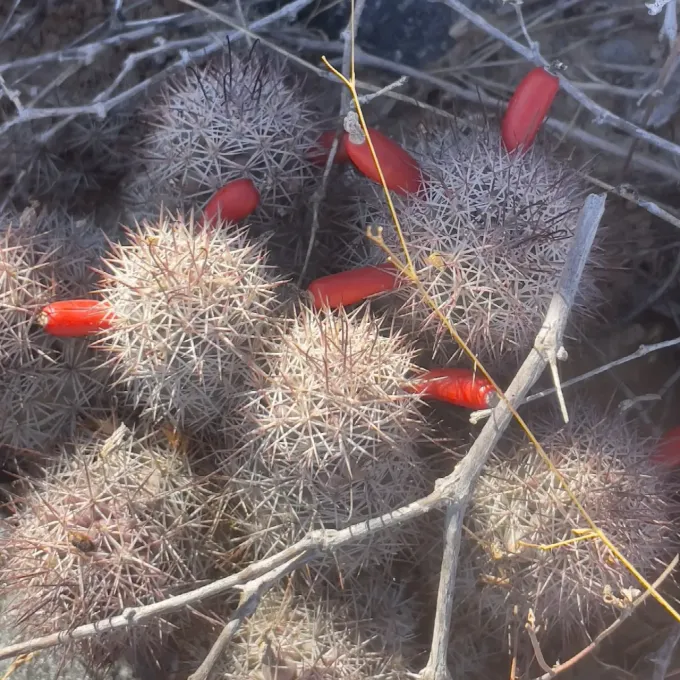
The plant is a cylindrical cactus that often forms dense clusters of multiple stems. The stem surface is covered with characteristic whitish pubescence and sharp spines, which inspired its specific name.
Successful cultivation requires conditions as close to the natural habitat as possible: an abundance of bright sunlight and good air ventilation. In shaded conditions, the plant will etiolate and lose its decorative form.
The soil for cultivation must provide excellent drainage and aeration. The best choice is a specialized cactus potting mix amended with coarse sand, perlite, or crushed gravel.
The temperature range during the growing season is 22–28°C. During the winter dormancy period, the plant should be kept at lower temperatures (between 10 and 15°C) with minimal to no watering.
Main diseases and pests
The main threats to the plant are fungal diseases that develop due to water stagnation in the root zone. Overwatering inevitably leads to basal stem rot, which is difficult to control in advanced stages.
Among pests, the spider mite is the greatest danger, attacking the epidermis under conditions of overly dry and stagnant air. Regular ventilation of greenhouses or rooms reduces the risk of pest infestation.
Mealybugs are also a common issue, hiding among dense spines and in the axils of the areoles. Systemic insecticides or mechanical cleaning with alcohol-based solutions are used for their control.
The root mealybug is a hidden threat, often detected only during plant repotting. If colonies are found, it is necessary to replace the entire substrate and disinfect the root system.
Disease prevention involves strict adherence to a watering schedule, using fungicides upon the appearance of initial rot spots, and maintaining the cleanliness of tools used for propagation.