
Catasetum socco
Catasetum socco
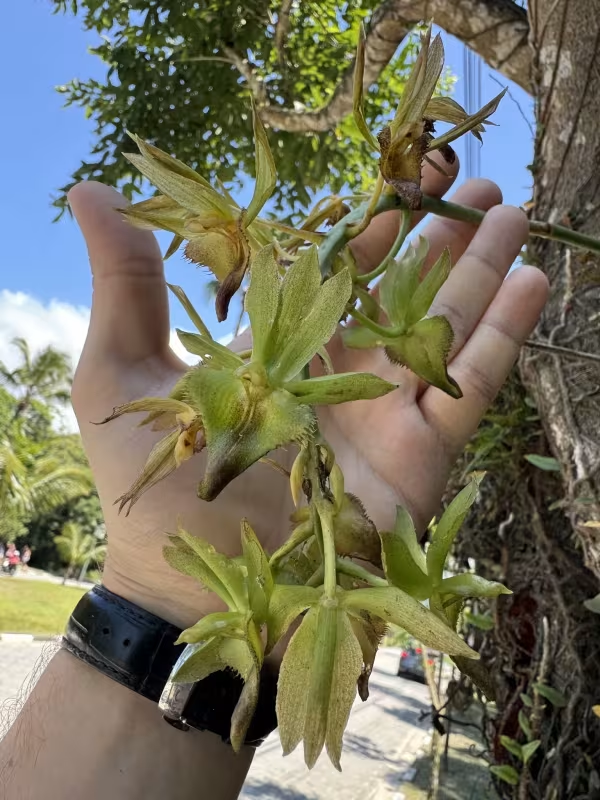
Description
Growing requirements
Catasetum socco is a distinctive epiphytic orchid belonging to the Orchidaceae family. Native to the tropical regions of South America, specifically found in Brazilian forests, it thrives in warm and humid environments typical of these ecosystems.
For successful cultivation, the plant requires a climate that mimics its natural habitat. Daytime temperatures should ideally be maintained between 24 and 28 degrees Celsius, with a night drop to roughly 18 degrees, which is essential for the plant's metabolic cycles.
The choice of potting medium is vital for the health of the root system. A loose, well-draining substrate composed primarily of fir bark, charcoal, and perlite ensures adequate aeration, preventing the roots from suffocating or rotting.
Lighting requirements are high compared to many other indoor plants. Catasetum socco needs bright, filtered light to develop robust pseudobulbs, which are the plant's storage organs that support flowering and growth.
The annual growth cycle is strictly divided into an active growing season and a dormant period. During dormancy, when the plant sheds its leaves, irrigation must be severely restricted to prevent the plant from entering a cycle of rot.
Main diseases and pests
Fungal pathogens and root rot are the most common threats to Catasetum socco, often triggered by over-watering or poor air circulation within the growing environment.
Spider mites represent the primary pest threat, particularly during dry seasons or in conditions with low atmospheric humidity, as they readily colonize the undersides of the leaves.
Scale insects can also infest the pseudobulbs, draining nutrients and weakening the plant's ability to produce new growth or flower spikes in the following season.
Preventive maintenance involves regular inspection of the plants, maintaining proper air movement, and ensuring that no moisture is trapped in the new growths after watering.
Integrated pest management strategies, including the use of systemic insecticides and good horticultural hygiene, are recommended to maintain the long-term health of this sensitive orchid species.