
Catasetum laminatum
Catasetum laminatum
Description
Growing requirements
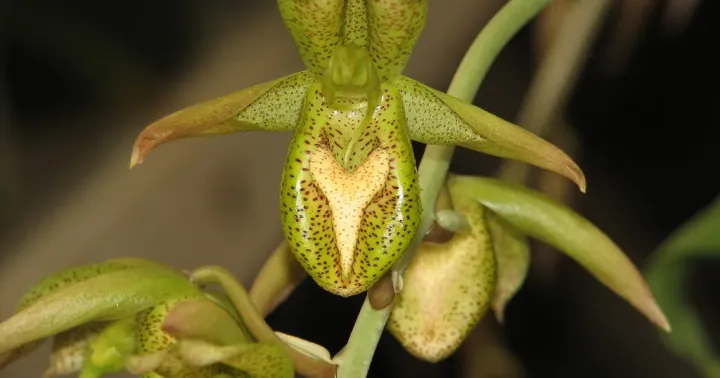
Catasetum laminatum is an epiphytic orchid belonging to the Orchidaceae family, native to the tropical regions of Mexico. It is highly valued for its unique flower morphology and the fascinating process of explosive pollination triggered by insect contact.
The plant exhibits a clear seasonal life cycle, characterized by a rapid growth period followed by a strict dormancy phase. Understanding these cycles is critical, as watering during dormancy will inevitably lead to root rot and the loss of the plant.
Cultivation requires bright light conditions, which stimulates the growth of robust pseudobulbs capable of storing water. In the greenhouse, it should be placed in an area with good ventilation to mimic its natural environment in the canopy of trees.
The substrate must be extremely well-draining, consisting primarily of medium-grade pine bark, charcoal, and perlite. Because the roots are adapted to be exposed to air, they need oxygen to prevent rotting, making the quality of the pot and media essential.
Fertilization should be performed exclusively during the vegetative growth phase. Use a balanced, water-soluble orchid fertilizer, diluting it to half strength to avoid salt accumulation, which can be detrimental to the delicate root tips of the orchid.
Main diseases and pests
Fungal rots are the most significant threat to Catasetum laminatum, particularly when the environment is humid but stagnant. Black rot can spread rapidly through the pseudobulbs if water is trapped in the center of the new growth.
Pests such as spider mites, aphids, and scale insects often attack these orchids, especially in low-humidity indoor environments. These insects weaken the plant by extracting nutrients, leading to yellowing leaves and impaired flower development.
Management of these pests involves the use of horticultural oils or systemic insecticides suited for delicate epiphytes. It is essential to treat both the top and bottom surfaces of the leaves to ensure complete eradication of the pest population.
Bacterial soft rot can occur if the plant is subjected to high heat combined with moisture. If such an infection is detected, the affected area must be cut back with a sterile blade, and the wound must be treated with a fungicide or sulfur powder.
To maintain a healthy collection, always isolate new acquisitions to prevent the introduction of pathogens. Proper spacing between plants ensures airflow, which is the best preventative measure against most foliage diseases.