
Catasetum blackii
Catasetum blackii
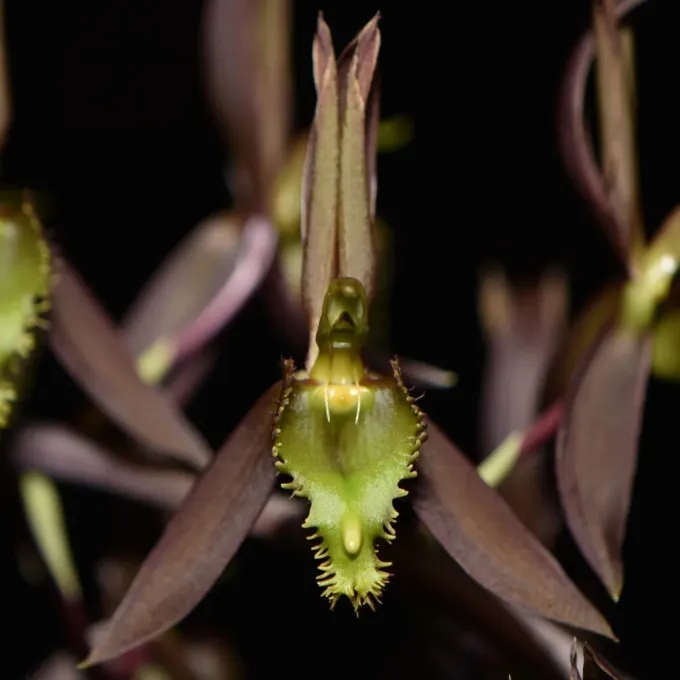
Description
Growing requirements
Catasetum blackii is a remarkable hybrid belonging to the Orchidaceae family, highly valued by collectors for its unique, dark-pigmented flowers. This sympodial orchid features pseudobulbs that store water and nutrients, allowing the plant to survive distinct seasonal cycles.
This crop thrives in bright, filtered light conditions, avoiding intense direct sunlight which can cause leaf necrosis. During the active growing season, it requires warm temperatures between +22°C and +28°C to promote healthy development of new vegetative shoots.
A well-draining substrate is essential for the health of the root system. A mixture consisting of medium-grade pine bark, charcoal, perlite, and a small portion of sphagnum moss provides the necessary aeration and moisture retention capacity.
Watering management is strictly tied to the growth cycle. During active growth, the plant needs consistent moisture, whereas in the dormant phase, after the leaves have shed, watering should be drastically reduced to prevent root rot.
High humidity, ideally ranging from 60% to 75%, is necessary for the plant to thrive. Maintaining good air circulation is equally important, as it helps prevent moisture from accumulating in the leaf axils, which could lead to bacterial infections.
Main diseases and pests
The primary pests targeting Catasetum blackii include spider mites and scale insects, which frequently appear if the cultivation area is too dry or lacks adequate airflow.
Fungal pathogens such as black rot are the most significant threats, often triggered by over-watering during periods of low light or cooler temperatures, leading to tissue collapse.
Routine inspection of the plant, especially the underside of the leaves and around the pseudobulbs, is essential for early detection and mitigation of potential pest infestations.
Chemical control involving appropriate fungicides or horticultural soaps should be used at the first signs of disease or pest presence to prevent rapid spread across the collection.
Proper sanitation, including the use of disinfected cutting tools and avoiding water retention in the substrate during dormancy, serves as the best defensive strategy against common orchid diseases.