
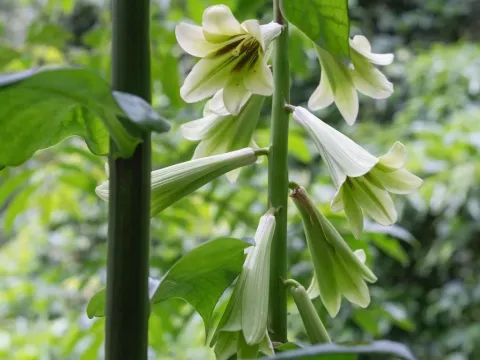
Cardiocrinum
Cardiocrinum
Cardiocrinum, often known as the giant lily, is a member of the Liliaceae family that requires specific propagation techniques. Seed propagation is the most common method, although it is a long-term project that requires patience and careful monitoring.
What the section contains


Cardiocrinum
Seeds are sown in late autumn, ideally in prepared outdoor containers that allow them to undergo a natural period of cold stratification. Exposure to fluctuating winter temperatures is essential for breaking seed dormancy and ensuring uniform germination.
Vegetative propagation involves separating bulblets from the parent bulb. This is usually performed after the plant has flowered and entered its dormant phase. The offsets are then replanted into nutrient-rich, well-draining soil to mature for several years.
Proper spacing is crucial when planting young bulbs, as the mature plant can reach significant heights and requires adequate airflow. Crowding the plants increases the risk of humidity-related issues and reduces the size of the flower stalk.
The transition from a seedling to a flowering-sized bulb typically takes several years, depending on the species and environmental conditions. Constant maintenance during this growth period is necessary to ensure the plant reaches its full potential.
Cardiocrinum thrives in environments that mimic its native habitat in the temperate forests of the Himalayas and East Asia. It requires a partially shaded location protected from strong winds that can damage the tall flower stalks.
The soil must be rich in organic matter, slightly acidic, and exceptionally well-drained. Incorporating leaf mold or compost into the planting hole helps maintain the moisture levels while preventing water from accumulating around the bulb.
Water management is critical, as the plant demands consistent moisture during the growing season. In hot, dry weather, mulching the base of the plant is recommended to keep the roots cool and prevent the soil from drying out too quickly.
Temperature sensitivity is a key factor, particularly in colder climates. Winter protection, such as applying a thick layer of mulch or using a burlap cover, is necessary to prevent the crown of the bulb from being damaged by deep freezes.
Regular fertilization with organic-based plant food during the spring promotes robust foliage development. Avoid excessive nitrogen applications, which can encourage soft, vulnerable tissue that is more susceptible to environmental stress and pests.
Bulb rot and other fungal infections are the most significant threats to Cardiocrinum. These diseases are often linked to poor drainage or excessive soil moisture, which creates a breeding ground for pathogens in the root zone.
Pests like lily beetles and aphids can significantly diminish the plant's health by feeding on leaves and stems. Regular inspection and the application of appropriate control measures are essential to keep populations at bay.
Gastropods, including slugs and snails, are frequent visitors that can devour young shoots overnight. Implementing protective barriers around the plants is a standard horticultural practice to prevent catastrophic damage during the spring growth phase.
Viral diseases, which can cause mottled leaves and stunted growth, are notoriously difficult to treat. Prevention is the best strategy, focusing on sourcing healthy bulbs and controlling potential insect vectors that spread these pathogens.
Good garden hygiene, including the removal of decaying plant debris and the maintenance of clear, weed-free zones around the base, helps reduce the incidence of disease and promotes overall vigor in the plant population.