
Cardiocrinum cordatum
Cardiocrinum cordatum
Description
Sowing dates
Sowing seeds of Cardiocrinum cordatum is best done in autumn, placing them in open ground to benefit from natural seasonal cooling.
The seeds require a prolonged period of cold stratification, typically lasting three to four months at temperatures near freezing.
In controlled settings, seeds should be stratified in a moist substrate to break dormancy and ensure germination in the following spring.
One must exercise patience, as the maturation process from a seed to the first bloom typically spans between five to seven years.
Because of this long duration, professional growers often prefer vegetative propagation by separating the small bulblets produced around the parent bulb.
Growing requirements
Cardiocrinum cordatum, a majestic member of the Liliaceae family, thrives best in woodland-like environments with dappled shade.
The soil must be rich in leaf mold, well-draining, and slightly acidic, ensuring that the bulbs do not sit in stagnant water.
Adequate moisture is essential throughout the growing season, so regular irrigation is necessary during dry spells to prevent wilting.
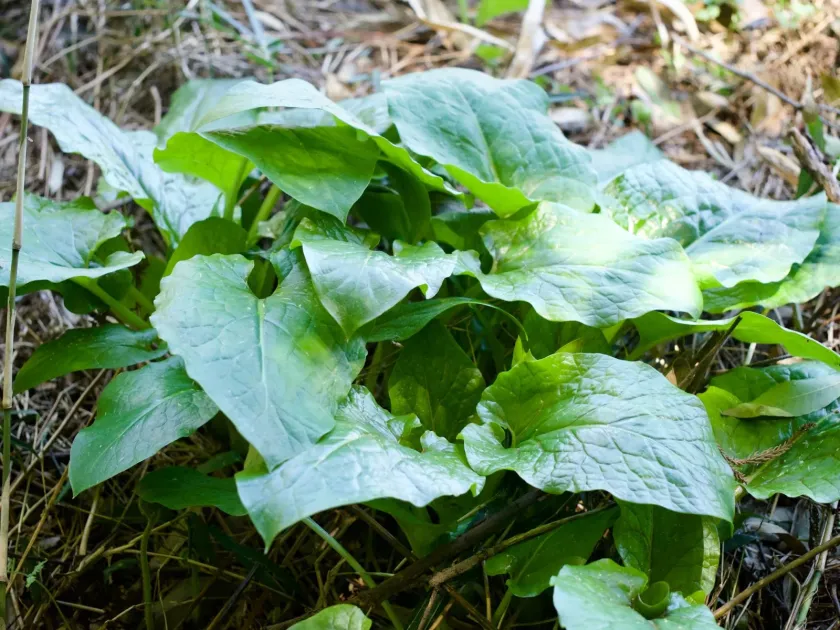
The plants are sensitive to strong winds and direct sunlight, which can damage the large, glossy heart-shaped foliage.
In colder regions, it is vital to apply a protective mulch of organic matter before the first deep frost to insulate the bulbs.
Main diseases and pests
Underground pests, particularly wireworms and the larvae of chafer beetles, represent the most significant threat to the bulbs.
Poor soil drainage creates an environment favorable for fungal infections and bulb rot, which can prove fatal to the entire plant.
Slugs and snails frequently target the succulent emerging leaves, causing significant damage that may weaken the plant’s vigor.
Maintaining good air circulation between plants and keeping the planting site weed-free helps reduce the prevalence of pests and diseases.
Regular inspection and, when necessary, targeted application of organic pest control measures are recommended for successful cultivation.
Harvesting
The harvest of seeds should take place in late summer as soon as the seed capsules turn brown and begin to lose their green color.
It is important to collect the seeds before the capsules burst open naturally, which would lead to the loss of viable planting material.
As a monocarpic species, the main bulb of Cardiocrinum cordatum will naturally expire after the flowering and seed production cycle.
The agricultural value of this plant is purely ornamental, and the primary objective of cultivation is to ensure the survival of offsets.
Following the die-back of the flower stalk, the area should be cleared, and the young bulblets carefully harvested for replanting in new, nutrient-rich beds.