
Aptenia
Aptenia N.R. Br.
Aptenia is a genus of perennial succulent plants belonging to the family Aizoaceae. Originating from the arid landscapes of South Africa, these plants have evolved to store water in their fleshy stems and leaves, making them highly resistant to drought.
What the section contains

Aptenia
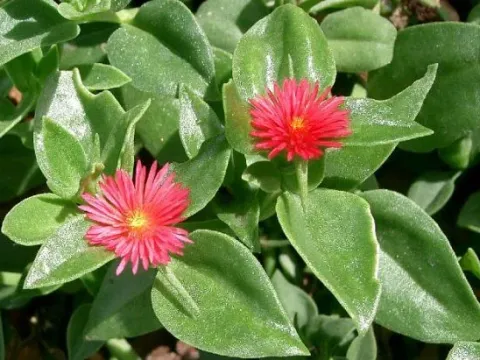
Botanically, the plant is characterized by its trailing growth habit and heart-shaped leaves. Its bright, daisy-like flowers open in response to intense sunlight, which makes it a preferred choice for sun-drenched gardens and rocky landscapes.
The primary environmental requirement for Aptenia is full, direct sunlight. When grown indoors or in shaded areas, the stems tend to stretch, losing their structural integrity and reducing the density of the foliage.
Regarding soil conditions, Aptenia demands a well-draining, sandy, or rocky substrate. In agricultural settings, it thrives in soils with low organic content but excellent aeration, preventing the roots from suffocating due to water retention.
Temperature management is critical; while it thrives in warm climates, it cannot withstand freezing temperatures. During the dormant winter phase, keeping the plant in a cool environment with minimal water ensures that it remains healthy and prepared for the spring blooming cycle.
Spider mites are the most common pest threatening Aptenia, particularly in indoor environments with dry air. Monitoring for fine webbing on the leaves is essential for early detection and mitigation using organic or chemical acaricides.
Mealybugs are another common nuisance that feeds on the plant sap, often leaving a white, cottony residue. Regular inspection and localized treatment with horticultural soaps are usually effective in controlling these infestations.
Root rot is the most significant disease caused by overwatering or poor drainage. Once the roots begin to decay, the entire plant is at risk, necessitating immediate cessation of watering and potentially re-rooting healthy cuttings.
Fungal leaf spot diseases can occur if the plant remains wet for extended periods or if air circulation is insufficient. To maintain plant health, ensure adequate spacing between individual plants and avoid overhead watering.
Systemic fungicides are recommended only as a last resort if physical methods of pest and disease management fail. Preventive measures, such as maintaining a proper watering schedule and clean growing tools, remain the best way to safeguard the collection.