
Heartleaf aptenia
Aptenia cordifolia (L. f.) Schwant.
Description
Growing requirements
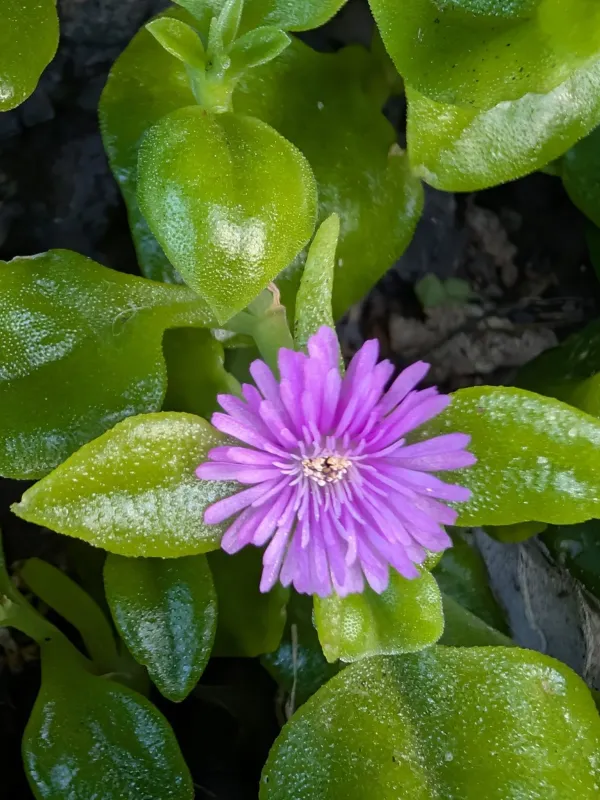
Heartleaf aptenia (Aptenia cordifolia) is a perennial succulent plant that belongs to the Aizoaceae family. It is native to South Africa, where it thrives in arid and rocky environments.
The plant is recognized by its succulent, heart-shaped leaves and bright, daisy-like flowers that bloom in shades of pink, purple, or red during the sunny periods.
This species is highly adapted to high-light environments. To maintain its compact growth habit, it requires full sun exposure for at least several hours each day.
The ideal soil for aptenia is a well-draining, gritty medium. A standard cactus or succulent potting mix is perfect, as it prevents excess moisture retention around the roots.
Regarding climate, the plant is frost-tender and should be kept in temperatures above 10 degrees Celsius. In cooler climates, it is typically cultivated as a container plant or an annual ground cover.
Main diseases and pests
The most common threat to heartleaf aptenia is root rot, which is almost exclusively caused by overwatering or poor soil drainage.
Mealybugs are frequently observed on this plant, appearing as white cottony masses in leaf axils where they feed on the succulent tissues.
Spider mites can also be a significant issue in low-humidity environments, leading to leaf discoloration and a general decline in plant vigor.
Managing these pests requires consistent monitoring and the application of neem oil or systemic insecticides if infestations become severe.
Ensuring proper spacing and good ventilation around the plants significantly reduces the risk of fungal outbreaks and pest colonization.