
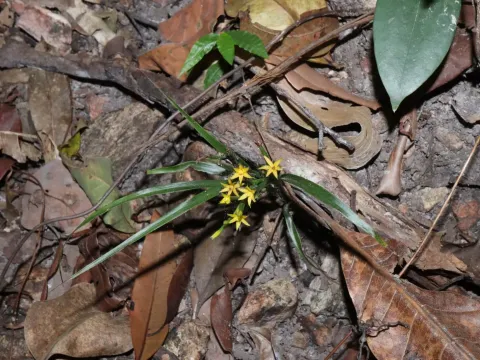
Apostasia
Apostasia
The genus Apostasia belongs to the family Orchidaceae and is recognized as one of the most primitive groups within the order Asparagales. Unlike modern orchids that possess highly specialized flower structures, Apostasia retains ancestral characteristics, making it a critical subject for botanical evolutionary studies.
What the section contains

Apostasia
It is important to clarify that Apostasia is not a commercial agricultural crop. These plants possess no economic value in terms of food production, fiber, or medicinal manufacturing. Their primary significance lies within ecological research and the preservation of tropical rainforest biodiversity.
The native distribution of the genus spans across the tropical and subtropical zones of Asia, the Malay Archipelago, and Northern Australia. These plants thrive in humid, shaded forest environments, where they rely on stable atmospheric moisture and specific soil micro-conditions to survive.
Cultivation requirements are extremely restrictive, and these plants are rarely found outside of protected botanical collections. Successful maintenance requires a specialized growing medium that replicates forest litter, alongside precise temperature and humidity controls that reflect their native habitats.
The main botanical feature distinguishing Apostasia is the presence of fertile stamens that are not fully fused into a column, a primitive state compared to advanced orchid species. This unique morphology provides insights into the early diversification of the orchid family and their long-term adaptation to diverse tropical environments.