
Apostasia odorata
Apostasia odorata
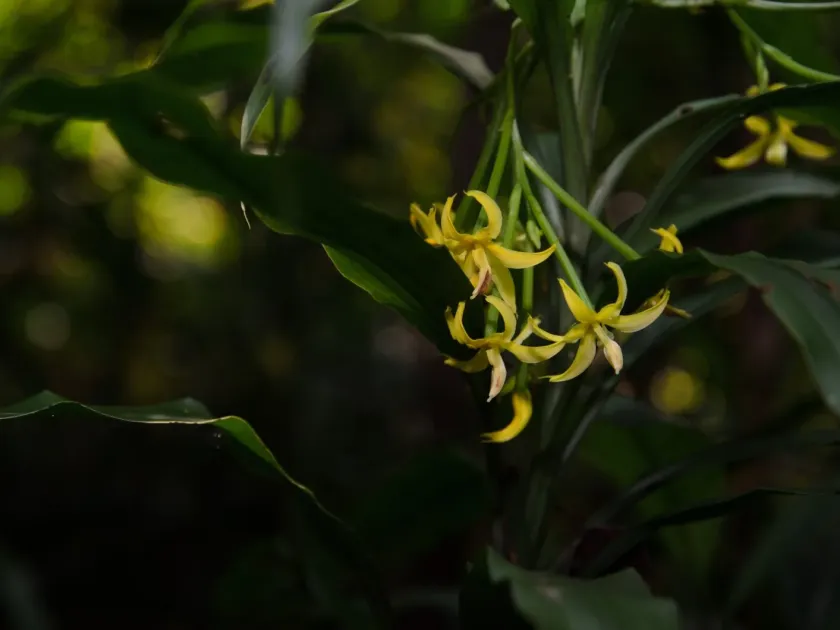
Description
Growing requirements
Apostasia odorata is a fascinating species belonging to the family Orchidaceae. Unlike modern, highly evolved orchids, it belongs to the primitive subfamily Apostasioideae, which shares evolutionary links with lily-like ancestors.
This species is native to the tropical forests of Southeast Asia. It thrives in shaded, humid environments, typically found on the forest floor where the soil is rich in decomposed organic matter and leaf litter.
Botanically, the plant is a terrestrial perennial herb. Its structure includes a short rhizome and erect stems adorned with spirally arranged, lanceolate leaves that demonstrate a distinct venation pattern.
Cultivation requires a well-draining substrate that mimics forest floor conditions. A mixture of perlite, orchid bark, and coconut coir is often recommended to ensure sufficient root aeration while maintaining moisture.
Consistent ambient conditions are vital for its survival. It prefers temperatures between 20°C and 28°C and high atmospheric humidity. It should be shielded from direct sunlight to prevent leaf scorch and dehydration.
Main diseases and pests
The primary threat to Apostasia odorata in a controlled environment is root rot caused by poor drainage. Overwatering creates anaerobic conditions that facilitate the growth of harmful bacteria and fungi.
Pests such as spider mites and mealybugs are significant threats. These insects tend to hide in the axils of the leaves, making them difficult to detect until a heavy infestation has occurred.
Poor ventilation is a critical factor leading to fungal foliage diseases. Stagnant air allows spores to settle and germinate on the leaves, leading to unsightly spots and tissue necrosis.
Environmental stress, such as exposure to cold drafts or low humidity, can cause the plant to drop its leaves. Once the foliage is lost, the plant struggles to recover due to its slow growth rate.
Chemical sensitivity is a concern for this species. When treating for pests or diseases, it is highly recommended to use diluted, organic-based solutions rather than harsh synthetic pesticides to avoid damaging the delicate tissues.