
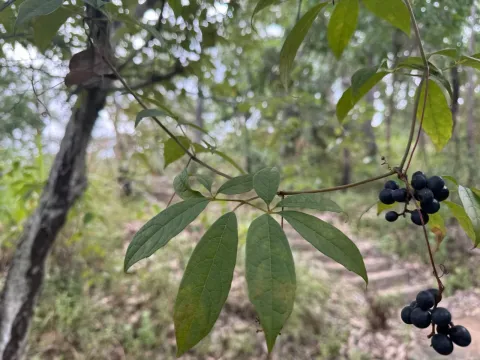
Ampelocissus
Ampelocissus
Ampelocissus is a genus of perennial woody vines belonging to the Vitaceae family, sharing a close botanical affinity with common grapes. These plants are characterized by their tendrils, which allow them to climb vigorously in their native tropical and subtropical habitats.
What the section contains
 Ampelocissus acetosa
Ampelocissus acetosa
Ampelocissus acetosa
 Ampelocissus africana
Ampelocissus barbata
Ampelocissus barbata
Ampelocissus bombycina
Ampelocissus bombycina
Ampelocissus cinnamomea
Ampelocissus cinnamomea
Ampelocissus africana
Ampelocissus africana
Ampelocissus barbata
Ampelocissus barbata
Ampelocissus bombycina
Ampelocissus bombycina
Ampelocissus cinnamomea
Ampelocissus cinnamomea
 Ampelocissus elegans
Ampelocissus elegans
Ampelocissus elegans
 Ampelocissus gracilis
Ampelocissus gracilis
Ampelocissus gracilis
 Ampelocissus latifolia
Ampelocissus latifolia
Ampelocissus latifolia
 Ampelocissus leonensis
Ampelocissus leonensis
Ampelocissus leonensis
 Ampelocissus martini
Ampelocissus martini
Ampelocissus martini
 Ampelocissus multistriata
Ampelocissus multistriata
Ampelocissus multistriata
 Ampelocissus polythyrsa
Ampelocissus rugosa
Ampelocissus rugosa
Ampelocissus polythyrsa
Ampelocissus polythyrsa
Ampelocissus rugosa
Ampelocissus rugosa
 Ampelocissus sarcocephalus
Ampelocissus sikkimensis
Ampelocissus sikkimensis
Ampelocissus thyrsiflora
Ampelocissus thyrsiflora
Ampelocissus sarcocephalus
Ampelocissus sarcocephalus
Ampelocissus sikkimensis
Ampelocissus sikkimensis
Ampelocissus thyrsiflora
Ampelocissus thyrsiflora
 Ampelocissus tomentosa
Ampelocissus tomentosa
Ampelocissus tomentosa
Ampelocissus
Originating from regions across Asia, Africa, Australia, and Central America, these vines thrive in environments with high humidity and consistent warmth. They are typically found in forest understories where they receive filtered sunlight.
Cultivation requires fertile, well-draining soil that is rich in organic matter. As an ornamental or research plant, it is essential to ensure that the container or planting site provides excellent drainage to prevent root rot, which is a common issue in captive environments.
The plant demands a stable climate with temperatures rarely dropping below 15°C. In temperate zones, it is exclusively cultivated in greenhouses or as an indoor plant, where it requires regular pruning to manage its rapid vegetative growth.
Agrotechnical maintenance includes balanced fertilizing during the growing season and providing structural support for the vines. Frequent misting or high-humidity greenhouse conditions are vital to mimic the plant's natural ecological niche.
Common threats to Ampelocissus include fungal infections such as powdery mildew, which thrive in stagnant air and high-humidity environments without proper ventilation. Proper spacing and airflow are crucial to mitigate these risks.
Pests such as spider mites and scale insects are frequent invaders, particularly in greenhouse conditions where they find refuge on the underside of large, succulent leaves. Early detection is key to preventing widespread infestation.
Root rot, caused by overwatering or compacted soil, remains the primary cause of plant death. Ensuring that the substrate dries slightly between waterings helps maintain root health and vigor.
To control pests effectively, gardeners often utilize horticultural oils or systemic insecticides if the damage is severe. Maintaining plant hygiene by removing dead or yellowing foliage helps reduce the load of potential pathogens.
Ongoing monitoring of the plant’s health, combined with proper environmental management, generally results in robust growth. Integrated pest management strategies are recommended to keep the vine in optimal condition throughout the year.