
Ampelocissus tomentosa
Ampelocissus tomentosa
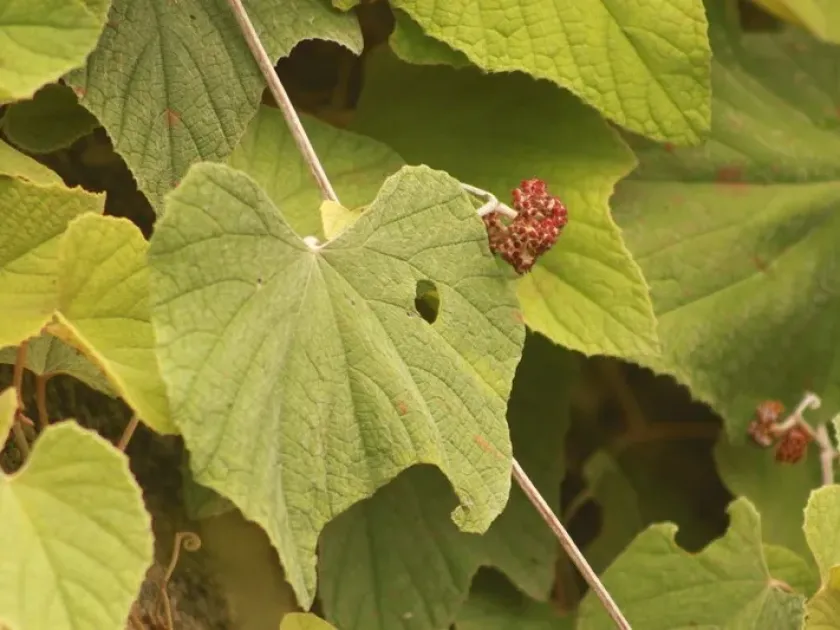
Description
Growing requirements
Ampelocissus tomentosa is a woody perennial climber belonging to the Vitaceae family. It is natively found across the tropical regions of India and Southeast Asia, growing in diverse forest habitats.
The culture thrives in warm, humid tropical environments. It requires significant solar radiation to support its vigorous growth, though it benefits from partial shading during the peak of the intense tropical summer.
Optimal soil conditions must include high organic matter content and excellent drainage. The plant is highly sensitive to waterlogged conditions, which can lead to fungal attacks on the root system.
Botanically, it is characterized by dense pubescence on its young stems and leaves, which gives it a velvety (tomentose) texture. This feature serves as an evolutionary adaptation to regulate gas exchange and moisture retention.
Agrotechnical practices include providing sturdy support structures to accommodate the plant's climbing habit. Pruning is often necessary to manage the canopy density and promote better airflow within the foliage.
Main diseases and pests
The primary threats to this vine include various fungal pathogens such as downy mildew, especially in high-humidity climates. Common insect pests include sap-sucking mites and scale insects which can weaken the plant.
Harvesting
The fruit of Ampelocissus tomentosa is harvested for local consumption or specific ethnomedicinal applications. Harvesting is typically done by hand as the berries reach maturity and exhibit a deep, dark coloration.