
Ampelocissus leonensis
Ampelocissus leonensis
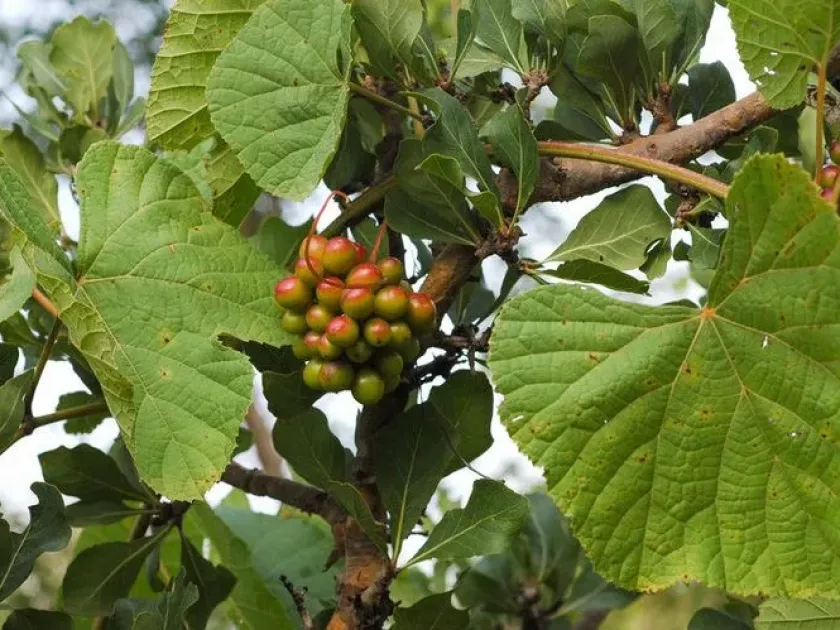
Description
Sowing dates
Ampelocissus leonensis is a perennial woody climber belonging to the Vitaceae family, native to the tropical forests of West Africa. The plant is primarily characterized by its vigorous climbing habit and ability to thrive in dense, humid environments.
Propagation is most effectively achieved through stem cuttings. In professional nurseries, cuttings are harvested during the active growing season and treated with rooting hormones to ensure high survival rates when planted in a well-draining, moist substrate.
When propagating via seeds, it is essential to ensure they are fresh and correctly stratified. Seeds should be sown in a warm environment with consistent moisture levels to break dormancy, typically requiring 25 to 30 degrees Celsius for optimal germination.
Successful cultivation requires the provision of robust support structures. As a climbing vine, Ampelocissus leonensis utilizes specialized tendrils to anchor itself. In field conditions, vertical trellises or existing trees are used to maximize vertical space and light exposure.
Proper spacing between plants is crucial for long-term health. In cultivation, a distance of 3 to 4 meters between rows and individual plants allows for adequate air circulation, which is vital for preventing the accumulation of moisture and pathogens within the foliage.
Growing requirements
The climate requirements for this species are strictly tropical. It thrives in regions with consistently high temperatures and high relative humidity, as the plant is highly sensitive to frost and cold damage, which can lead to significant dieback.
Soil quality is paramount for the development of a healthy root system. The species performs best in deep, fertile, organic-rich soils that possess excellent drainage. It is intolerant of waterlogged conditions, which can quickly lead to root rot and systemic failure.
Regarding light exposure, the plant favors dappled shade or semi-shaded conditions. Direct, intense sunlight can scorch the leaves if not balanced with sufficient soil moisture, reflecting the plant's evolutionary adaptation to the forest understory and edges.
Irrigation must be managed to maintain consistent soil moisture throughout the vegetative phase. During the dry season, supplemental watering is necessary to prevent premature leaf drop and to support the development of fruit bunches in mature specimens.
Nutrient management involves applying balanced, slow-release fertilizers at the onset of the growing season. Micronutrient deficiencies can be managed with periodic soil amendments, ensuring the plant receives necessary elements for robust vine growth and fruit production.
Yield
The yield of Ampelocissus leonensis consists of small, palatable berries organized in compact bunches. While not a commercial crop on a global scale, it serves as a meaningful horticultural resource for local consumption in its native range.
Peak productivity is achieved when the plant reaches maturity, typically after 4 to 5 years of stable growth. At this stage, a well-managed vine can produce multiple fruiting clusters, significantly contributing to the local biodiversity-based food supply.
The ripening process of the fruit is gradual, often requiring selective harvesting. This practice ensures that only the best-quality, sugar-ripened berries are collected, preserving the integrity of the harvest and optimizing the flavor profile of the fruit.
Biochemical analysis of the fruit suggests a valuable composition of organic acids and sugars. The fruit is consumed fresh or processed into traditional beverages and jams, demonstrating the utility of this species in small-scale local food systems.
As interest in underutilized tropical crops grows, further studies are required to establish agronomic standards for increasing yield. Improvements in training and pruning techniques may significantly enhance fruit quality and overall production per hectare.
Main diseases and pests
Pest management is a critical component of Ampelocissus leonensis cultivation. The plant is susceptible to various leaf-chewing insects, particularly during the early stages of growth, which can severely compromise the plant's photosynthetic capacity.
Fungal diseases are a persistent threat, especially in areas with stagnant air and high humidity. Conditions such as powdery mildew can quickly spread across the foliage, causing reduced growth and potential defoliation if not controlled through early intervention.
Integrated Pest Management (IPM) strategies are highly recommended to minimize the use of synthetic chemicals. This includes regular field scouting, biological controls, and the mechanical removal of infected plant parts to maintain a healthy growing environment.
Root rot is perhaps the most dangerous issue, as it is often caused by poor drainage or over-irrigation. Once established, this pathogen is difficult to treat, often necessitating the complete removal of the affected vine to protect neighboring plants.
Preventative measures include rigorous sanitary pruning and the maintenance of a clear, weed-free zone around the base of the plant. Ensuring that the foliage does not become too dense is key to managing microclimate conditions and preventing disease outbreaks.