
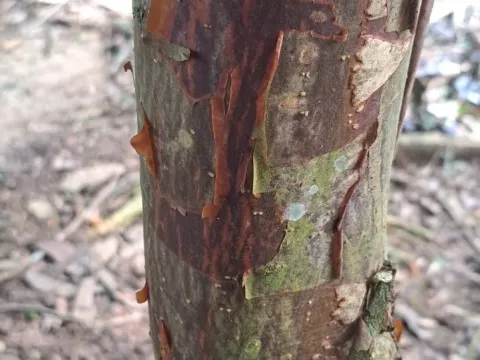
Amburana
Amburana
The reproduction of Amburana on a commercial scale is typically carried out through seeds. Sowing is recommended at the beginning of the rainy season when soil moisture is optimal for germination.
What the section contains


Amburana
Before sowing, seeds often undergo scarification to break the hard outer coat, which significantly speeds up the emergence of seedlings in nursery conditions.
Seedlings require protection from direct, intense sunlight during their first weeks of life, often necessitating shaded areas until they reach a height of 20–30 cm.
Transplanting to the permanent site is performed once the saplings have developed sufficient stem strength and root stability to withstand environmental stress.
In natural settings, Amburana shows a high percentage of natural regeneration if the area is free from dense grass cover that might compete with the developing seeds.
Amburana belongs to the Fabaceae family. This tree thrives in regions with a distinct tropical climate characterized by alternating wet and dry seasons.
The plant demonstrates remarkable resistance to drought, making it a promising candidate for the reforestation of degraded lands in arid regions of South America.
Soil preferences include well-drained, fertile soils with a neutral or slightly acidic pH, although the tree is adaptable to less ideal growing conditions.
As a light-demanding species, Amburana requires proper spacing between trees during plantation establishment to minimize competition for sunlight and maximize growth rates.
Optimal temperatures for active growth range from 22 to 30 degrees Celsius, with the plant maintaining viability even through moderate temperature fluctuations.
The economic value of Amburana is derived not only from its high-quality timber but also from the harvest of valuable plant materials, such as bark and seeds used in pharmaceuticals.
Amburana timber is highly regarded for its strength, resistance to decay, and a distinct aroma reminiscent of vanilla or cinnamon, making it a premium choice for woodworking.
In both traditional and modern medicine, the demand for extracts derived from Amburana bark supports a stable market value, ensuring profitability over the long term.
With proper forest management, one can achieve high biomass density, significantly increasing the productivity and economic output per hectare of land.
Seed yield for both reproduction and essential oil extraction depends on tree maturity and care, usually reaching its peak production capacity after 10–12 years.
The primary threats to young Amburana plantations include fungal root diseases, which are often exacerbated by waterlogged soil conditions in nurseries.
Insects, particularly leaf-eating caterpillars, can cause significant damage to the foliage of young trees during periods of active sap flow.
Pathogenic bacteria can lead to the formation of bark ulcers, which decrease the overall quality of the timber and leave the tree susceptible to secondary infections.
Poor selection of companion crops in agroforestry systems may facilitate the spread of pests common to leguminous plants, requiring strict crop rotation protocols.
Regular phytosanitary monitoring is recommended to minimize risks, including the maintenance of clear planting circles and the removal of affected plant parts.