
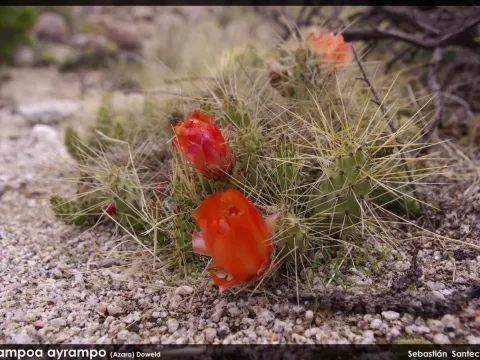
Airampoa
Airampoa
Propagation of Airampoa in commercial or collector settings is most commonly achieved through vegetative means, specifically by cutting individual stem segments. The optimal time for this process is late spring or early summer, when the plant is in its active growth phase.
What the section contains

Airampoa
Cuttings require a preliminary drying period of several days in a dry, shaded area to allow for the formation of a dense callus. This is a critical step that prevents the planting material from rotting upon contact with the substrate.
Planting is performed in loose, well-draining soil with a high mineral content, such as sand or fine gravel. The depth of the cutting in the soil should be minimal to avoid excess moisture at the base of the stem.
After planting, watering is almost entirely suspended for the first two weeks to stimulate the development of the root system in search of moisture. Only after signs of rooting appear is the watering intensity gradually increased to a moderate level.
For seed propagation, sowing is conducted in spring using a sterile substrate and ensuring a stable temperature above 22 degrees Celsius. Airampoa seedlings require careful management as they are extremely sensitive to fungal infections during the early stages of development.
Airampoa belongs to the Cactaceae family and is naturally adapted to the harsh, high-altitude conditions of the Andes. It prefers maximum intense sunlight, without which the stems lose their density and characteristic coloration.
The culture is extremely demanding regarding soil drainage. The soil must be poor in organic matter, with a pronounced acidic or neutral reaction and a large amount of rocky debris, ensuring the unrestricted flow of excess moisture away from the roots.
During the growing season, the plant needs moderate temperatures but can withstand significant diurnal temperature fluctuations typical of high-altitude regions. In winter, Airampoa requires dry conditions and lower temperatures, which is a key factor for successful blooming.
Watering must be strictly regulated; waterlogging is the primary cause of death for plants of this genus. It is recommended to use bottom watering or strictly controlled moisture application in the root zone, avoiding water contact with the stem segments themselves.
In greenhouse conditions, it is necessary to ensure constant air circulation to prevent moisture stagnation and the formation of condensation. The use of specialized fertilizers with low nitrogen content helps maintain the plant's natural shape and epidermis health.
Airampoa is not a traditional food crop in a broad agricultural sense, although it has economic value in regions within its natural range. The fruits of certain species within this genus may be consumed by local populations.
Economic use also includes the harvesting of specific pigments contained in the epidermis or fruit, which can be applied as natural dyes. Output volume depends directly on lighting conditions and the length of the growing season.
In ornamental horticulture, yield is determined by the number of viable cuttings obtained from a single mother plant. A healthy plant, when properly cultivated, is capable of forming dense colonies suitable for sale as planting material.
Blooming, an important stage of productivity for breeding purposes, occurs when the plant reaches a certain biological maturity. In optimal conditions, Airampoa clumps spread, increasing their coverage area, which is highly valued in landscape design.
Quantitative productivity metrics for this crop in agronomic references are often qualitative, as the plant remains primarily an object of highly specialized or amateur cultivation.
The most dangerous threats to Airampoa are root and stem rots, which occur when watering regimes are disrupted. Fungal infections develop rapidly and often lead to the total loss of the plant within a few days.
Among pests, mealybugs pose the greatest threat, hiding in the joints of segments and under the spines. Detecting them at an early stage is difficult due to the dense spiny covering of the plant.
Spider mites can damage the epidermis in excessively dry air, leaving characteristic spots and lowering the cactus's immunity. Regular preventive inspections using a magnifying glass allow for early detection and mitigation.
- Root rot (Phytophthora)
- Mealybugs
- Spider mites
- Root mealybugs
For pest control, the use of systemic insecticides is recommended; however, it is important to ensure the chemical does not cause burns to the delicate plant tissues. Preventive soil treatment before planting significantly reduces the risk of pest infestation.
Harvesting fruits, if used for economic purposes, is carried out after full maturation, when they achieve the color characteristic of the species. It is important to use protective gloves, as the spines of many Airampoa species are extremely sharp and can easily break off, remaining embedded in the skin.
Harvesting cuttings for propagation is performed during the active growth period. Using a sharp, sterile tool, the most developed segments are detached, minimizing trauma to the mother plant.
After separating the cuttings, the cut surfaces on the mother plant should be dusted with activated charcoal powder to prevent infection. This accelerates healing and reduces the risk of pathogenic microorganism growth.
Transporting collected material requires special care due to the fragility of the succulent stems. Cuttings should be individually wrapped to prevent mechanical damage to the epidermis and spine breakage.
Storage of planting material until rooting must take place in a dry, cool area with good ventilation. It is strictly forbidden to store cuttings in plastic packaging, as this causes immediate condensation and subsequent rotting.