
Skunk cabbage
Symplocarpus foetidus
Description
How to tell it apart
Skunk cabbage (Symplocarpus foetidus) belongs to the Araceae family. It is a perennial herbaceous plant with a massive, deep-reaching root system that can extend up to 60 cm into the soil, making it a formidable weed in appropriate environments.
The plant is easily identified by its notorious, pungent odor, which resembles rotting meat or garlic. This smell is a biological adaptation to attract early-season pollinators like flies and beetles that are active even when temperatures are near freezing.
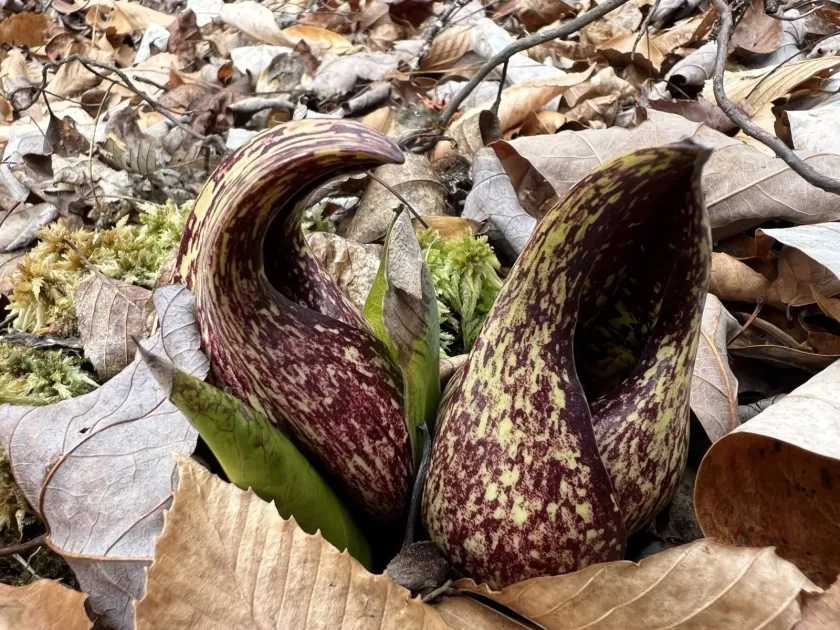
The flower is characterized by a fleshy spadix enclosed in a mottled, hooded spathe. This structure appears very early in the spring, often piercing through ice or snow, thanks to the plant's unique ability to generate its own metabolic heat through thermogenesis.
Large, lush green leaves emerge after the flowering stage. These leaves grow in wide rosettes, reaching significant dimensions and effectively shading out any neighboring plants, which creates intense competition for light in agricultural settings.
The root system is fleshy and contractile, pulling the plant deeper into the soil as it matures. This biological trait allows the plant to survive harsh winter conditions and makes physical removal extremely challenging for farmers.
Where it grows
Skunk cabbage primarily inhabits wet, swampy, and poorly drained areas. It thrives in wetlands, marshes, and river floodplains, where the water table is high throughout the growing season.
On agricultural land, it is considered a problematic weed in low-lying fields or areas where drainage systems have failed. Once it establishes a foothold in moist soil, it rapidly expands its territory, forming dense colonies that are difficult to eradicate.
The presence of skunk cabbage serves as a bioindicator of high moisture levels. It does not tolerate dry or well-drained soils, meaning that improvements in soil aeration and water management are often the most effective natural deterrents.
Abandoned ditches and field edges often serve as reservoirs for this plant. From these sites, it can gradually invade active crop fields, particularly in zones where irrigation or rainfall leads to stagnant water accumulation.
It is not typically found in upland fields, but in regions with irregular topography, it can become a localized nuisance in depressions where moisture collects after heavy rains.
##harm##The primary agricultural harm caused by skunk cabbage is the displacement of desired crops. Its dense leaf canopy blocks sunlight, hindering the growth of surrounding plants and leading to substantial yield losses in affected areas.
The plant competes aggressively for soil nutrients and water, which is particularly detrimental during the early stages of crop development. Its persistent roots can also interfere with soil cultivation, complicating the use of machinery.
Skunk cabbage may act as an alternative host for certain pathogens that affect agricultural crops. The humid microclimate within its large leaves can promote the growth of molds and fungi that spread to nearby cultivated plants.
Livestock rarely graze on it due to the presence of calcium oxalate crystals, which cause irritation in the mouth and throat. Contamination of hay or silage with skunk cabbage parts can degrade the quality of animal feed.
The financial impact of this weed is reflected in the costs of specialized drainage projects and the necessity of targeted chemical control to reclaim infested land from the encroachment of this hardy perennial.
How to control
Effective control of skunk cabbage starts with water management. Since the plant requires saturated soil to survive, improving land drainage is the most sustainable way to inhibit its growth and prevent further spread.
Physical removal is difficult due to the deep root system. If digging is attempted, it is critical to remove the entire root structure; leaving even small fragments in the soil often leads to vegetative regrowth and rapid recovery of the plant.
Chemical control often involves the use of systemic herbicides, such as glyphosate, applied during the active growth phase. Careful spot treatment is necessary to minimize herbicide load on the environment and surrounding vegetation.
Due to the plant's resilience, a single treatment is rarely sufficient. Multiple applications over several growing seasons are typically required to exhaust the energy reserves stored in the large, fleshy roots.
- Install deep drainage tiles to lower the water table.
- Perform deep tillage to expose and remove root fragments.
- Use systemic herbicides targeted during the pre-flowering or active leaf stage.
- Maintain a buffer zone between wetlands and active crop fields.
Taxonomy
- Latin name
- Symplocarpus foetidus
- Family
- Ароидные
- EPPO code
- SYLFO