
Ivy-leaved duckweed
Lemna trisulca
Description
How to tell it apart
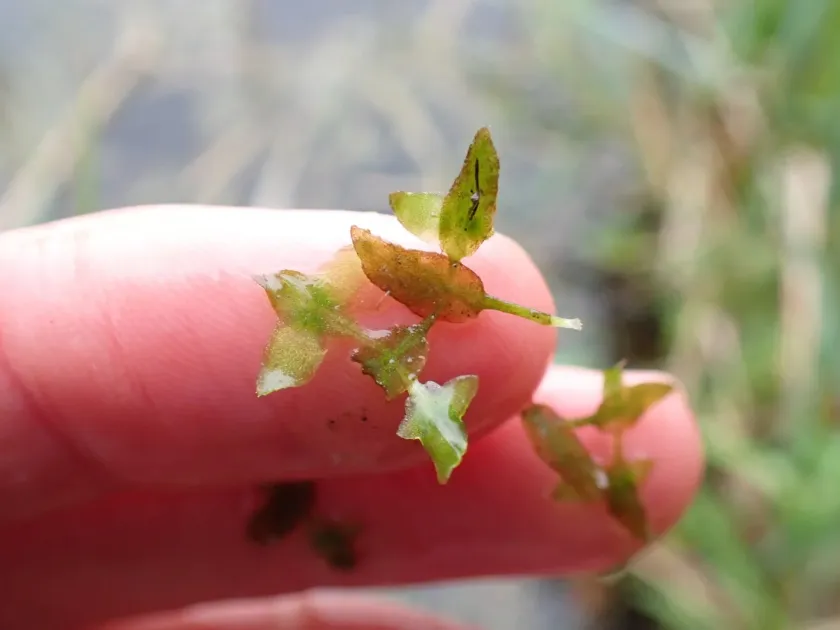
Ivy-leaved duckweed (Lemna trisulca) is an aquatic plant belonging to the Araceae family. Unlike other duckweed species, it forms distinctive, submerged, branching chains that look like tangled nets.
The individual fronds are lanceolate or elliptical in shape, measuring up to 10 mm in length. They are connected at right angles, which gives the plant its characteristic sprawling and complex appearance.
Unlike common duckweed that floats on the surface, this species typically stays submerged in the water column. It is rootless, allowing it to drift freely until it catches on submerged structures or debris.
Vegetative reproduction is the primary mode of growth, occurring through the detachment of individual frond segments. This allows the plant to cover large areas of water in a short timeframe.
The plant is highly adaptive to low-light conditions. It often thrives in shaded areas of ponds where other aquatic plants might struggle to photosynthesize effectively.
Where it grows
The species is widespread throughout the Northern Hemisphere, primarily inhabiting standing or slow-moving freshwater bodies. Common habitats include ponds, marshes, ditches, and stagnant stream backwaters.
In agricultural contexts, it often invades irrigation canals and reservoirs. The presence of the weed in these areas can disrupt the flow of water needed for crop irrigation.
It favors eutrophic water environments that are rich in nitrogen and phosphorus. Runoff from agricultural fields containing synthetic fertilizers often triggers population explosions of this weed.
It can survive in a wide range of water temperatures, remaining dormant in the sediment during cold winter months. This resilience makes it a persistent weed to manage once it has established.
Stagnant water conditions are essential for its proliferation. In systems where there is a consistent flow or regular water exchange, the plant population is usually kept to a minimum.
Harm it causes
The main harm caused by ivy-leaved duckweed is the depletion of dissolved oxygen. Dense mats restrict light penetration and gas exchange, leading to hypoxic conditions fatal to fish.
The accumulation of massive amounts of biomass accelerates the sedimentation process. When the plants die, they settle at the bottom, contributing to sludge buildup and potential methane release.
It poses a significant threat to irrigation infrastructure by clogging filters, pumps, and spray nozzles. This forces frequent maintenance downtime and decreases the efficiency of irrigation systems.
The shading effect significantly hampers the growth of beneficial phytoplankton. This disruption at the base of the food web negatively impacts the productivity of managed fish ponds.
The aesthetic and sanitary quality of water is degraded by the presence of large floating mats. This makes the water less suitable for irrigation use and poses risks to livestock health if consumed.
How to control
Mechanical removal is the most direct control strategy. Using nets, rakes, or mechanical harvesters helps to physically reduce the volume of the plant in infested areas.
Biological control methods include stocking herbivorous fish like grass carp. These fish are known to graze on aquatic vegetation, providing a sustainable long-term solution.
Chemical control involving aquatic-safe herbicides is an option, though it requires strict adherence to environmental regulations. Treatment must be localized to minimize damage to the ecosystem.
- Regular monitoring of water quality to prevent over-fertilization.
- Installing physical barriers at the intake of irrigation systems.
- Implementing aeration techniques to disrupt stagnant water zones.
- Winter draining of ponds to kill off submerged vegetative fragments.
A proactive management plan focusing on nutrient reduction is vital. Reducing the influx of fertilizers from adjacent fields is the most effective way to prevent the recurrence of weed blooms.
Taxonomy
- Latin name
- Lemna trisulca
- Family
- Ароидные
- EPPO code
- LEMTR