
Fat duckweed
Lemna gibba
Description
How to tell it apart
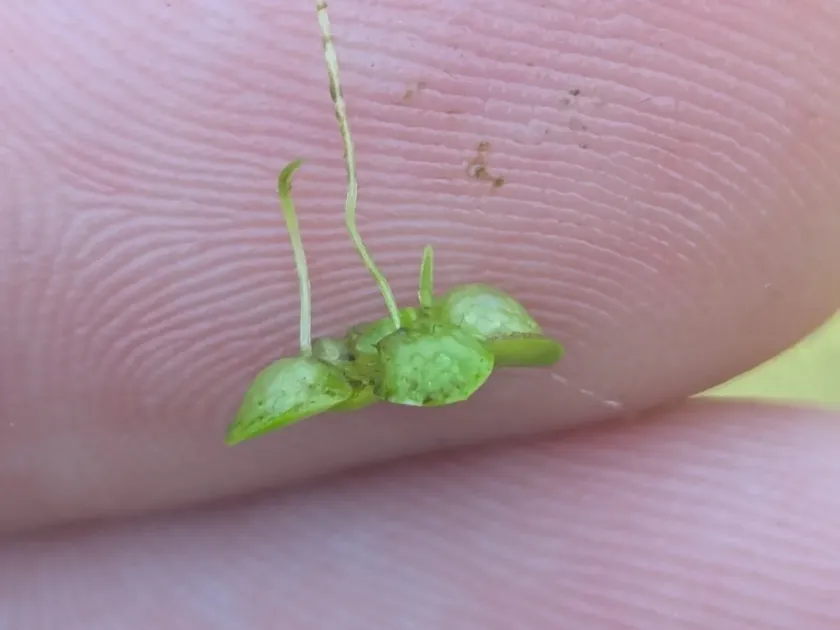
Fat duckweed (Lemna gibba) is a small aquatic plant belonging to the Araceae family. It consists of a flat or rounded frond, which is the vegetative body of this floating plant.
The defining characteristic of this species is the thickened, spongy underside of the frond. This swelling is caused by large air-filled tissues, which provide the plant with significant buoyancy in stagnant water.
Each frond has a single root that hangs down into the water column. The plant propagates primarily through vegetative budding, where new fronds emerge from the margins of the parent plant.
Because of its rapid reproduction, Lemna gibba can cover the entire surface of a pond or canal within a few weeks under favorable temperature and nutrient conditions.
It is capable of overwintering in various forms, including the production of turions, which allow the plant to survive adverse conditions at the bottom of the water body.
Where it grows
This weed is typically found in stagnant or slow-moving waters such as ponds, lakes, ditches, and agricultural irrigation channels. It is highly responsive to nutrient-rich environments.
In agricultural settings, it frequently infests rice paddies and aquaculture ponds, where high levels of fertilizer runoff promote uncontrolled growth and surface coverage.
Harm it causes
The primary concern is the formation of a thick floating mat that prevents sunlight from penetrating the water, thereby disrupting the ecosystem balance and inhibiting rice development.
Dense colonies of fat duckweed significantly reduce the dissolved oxygen levels in the water, which can be detrimental to fish stocks and aquatic fauna within the system.
Furthermore, the plant interferes with irrigation infrastructure by clogging pump intakes, filters, and valves, necessitating costly and frequent manual or mechanical maintenance.
How to control
Effective management begins with mechanical removal using nets or booms to clear the surface. This is often an immediate solution but requires regular repetition during the growing season.
Water management strategies, such as increasing water flow velocity or periodic flushing of irrigation channels, can make conditions less suitable for the colonization of fat duckweed.
Chemical control involving aquatic-approved herbicides is used as a last resort in severe infestations, though it must be carefully managed to avoid harmful impacts on the surrounding ecosystem.
Taxonomy
- Latin name
- Lemna gibba
- Family
- Ароидные
- EPPO code
- LEMGI