
Duckweed
Lemna
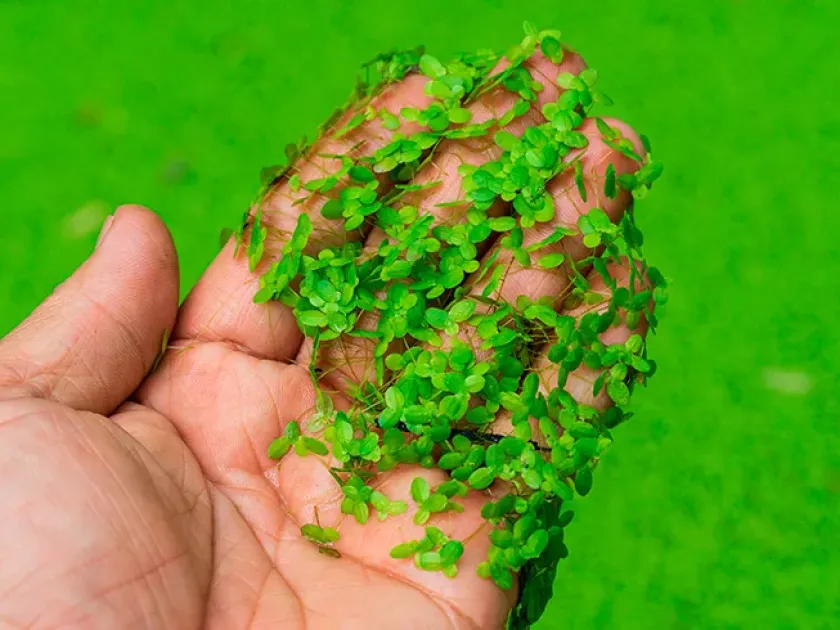
Description
How to tell it apart
Duckweed belongs to the family Araceae and is recognized as one of the smallest and simplest flowering plants in the world.
The plant body, known as a frond, floats on the water surface and typically lacks distinct differentiation between stem and leaf structures.
Depending on the species, each frond may have one or more thin roots dangling into the water to absorb essential nutrients.
It reproduces primarily through rapid vegetative budding, allowing a single colony to double its surface area within a few days.
When massed together, these plants form dense green mats that can completely obscure the surface of standing water bodies.
Where it grows
Duckweed thrives in slow-moving or stagnant water bodies, such as ponds, ditches, marshes, and irrigation canals on agricultural land.
In farming environments, it is a significant nuisance in rice paddies and water storage tanks used for crop irrigation.
The plant prefers nutrient-rich waters, particularly those contaminated with agricultural runoff containing excess nitrogen and phosphorus.
It can quickly colonize wet areas caused by poor drainage, creating persistent issues for field management and water circulation.
Dispersal is frequently facilitated by migratory waterfowl, which carry small fronds on their feathers or feet between different water sources.
Harm it causes
The dense cover of duckweed restricts sunlight penetration, which inhibits the photosynthesis of submerged aquatic plants and reduces dissolved oxygen.
This oxygen depletion leads to poor water quality, which can adversely affect fish populations and beneficial aquatic microorganisms.
In agricultural settings, it clogs irrigation pumps, intake screens, and filtration systems, leading to costly maintenance and operational delays.
Duckweed competes with rice and other aquatic crops for nutrients, potentially reducing yields if not managed during the early growth stages.
The accumulation of decaying plant matter beneath the surface creates anaerobic conditions that produce odors and harmful gases.
How to control
Physical removal is the most common management strategy, utilizing surface skimmers, nets, or mechanical harvesters to clear the biomass.
Improving water circulation and aeration can effectively discourage duckweed growth, as the plant prefers calm and stable water environments.
Biological control involves stocking the water with herbivorous fish species, such as grass carp, which graze on the weed and reduce its density.
Chemical control with approved herbicides can be effective, though it requires careful timing and monitoring to prevent environmental damage.
- Regular physical cleaning of irrigation channels.
- Introduction of aeration systems to keep water moving.
- Utilization of herbivorous fish for natural reduction.
- Strict monitoring of nutrient runoff from fertilizers.
- Timely application of aquatic-safe herbicides.
Taxonomy
- Latin name
- Lemna
- Family
- Ароидные
- EPPO code
- LEMSS