
Tiny duckweed
Lemna perpusilla
Description
How to tell it apart
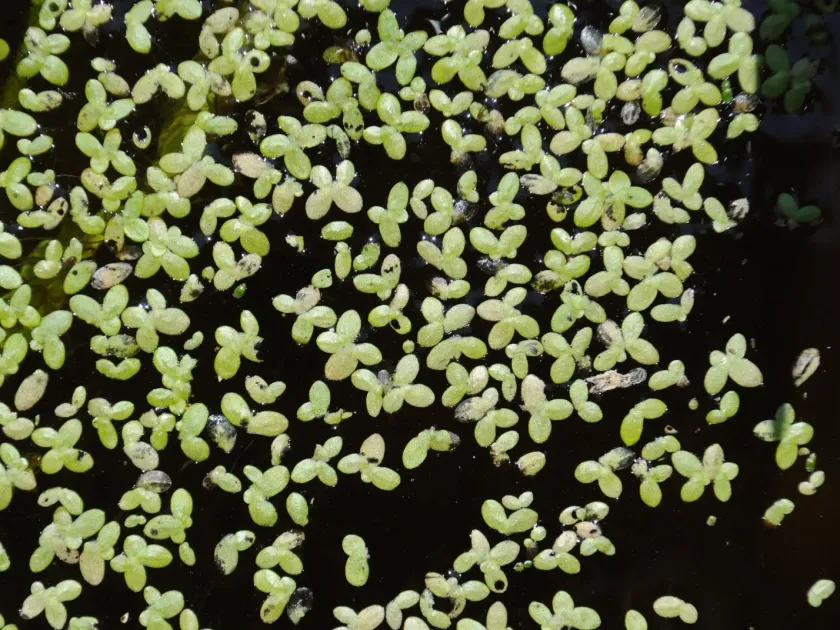
Tiny duckweed (Lemna perpusilla) is a small aquatic plant belonging to the Araceae family. It is recognized as one of the smallest flowering plants on the planet.
The plant body, or frond, is small, measuring approximately 1–3 mm in length, and is typically elliptical or ovate in shape.
A single, slender root hangs from the underside of each frond, functioning to absorb nutrients directly from the water column rather than from the soil.
The plant reproduces primarily through rapid vegetative budding, where new fronds emerge from small lateral pockets on the parent plant.
Although it produces flowers, they are rare, extremely reduced, and lack petals, making them almost impossible to spot without magnification.
Where it grows
This species thrives in still or slow-moving freshwater environments, such as ponds, marshes, drainage ditches, and flooded agricultural fields.
It is particularly problematic in rice paddy fields, where the shallow, warm, and nutrient-rich water provides an ideal environment for colonization.
Tiny duckweed is highly responsive to eutrophication and tends to proliferate in areas with high levels of nitrogen and phosphorus runoff.
Optimal growth temperatures generally range between 20°C and 30°C, with high light intensity significantly accelerating its biomass production.
During colder months, it may sink to the bottom of the water body, entering a dormant stage until conditions improve the following spring.
Harm it causes
The primary concern is the formation of thick, dense mats on the water surface, which prevents sunlight from reaching submerged flora.
This shading effect disrupts the aquatic ecosystem, hindering the growth of crops like rice and reducing overall biodiversity in the water.
Mats of duckweed impede gas exchange between the air and the water surface, leading to low dissolved oxygen levels that harm aquatic life.
Accumulation of this weed in irrigation systems reduces water flow efficiency, which can lead to drainage problems or uneven irrigation.
It can also serve as a breeding ground for mosquitoes and other pests, negatively impacting the health and sanitation of the agricultural area.
How to control
Mechanical control is effective in smaller areas and involves the physical removal of the plant mats using nets or specialized skimmers.
Improving water circulation is a key agrotechnical strategy, as creating a constant flow of water makes it difficult for duckweed to establish.
Chemical control can be achieved using aquatic-safe herbicides, though application must be carefully managed to avoid environmental damage.
Integrated pest management should focus on reducing nutrient runoff from fields to decrease the nutritional load that feeds the duckweed.
Regular monitoring of water channels is essential to prevent large-scale infestations and to ensure efficient water management throughout the season.
Taxonomy
- Latin name
- Lemna perpusilla
- Family
- Ароидные
- EPPO code
- LEMPA