
Dark duckweed
Lemna obscura
Description
How to tell it apart
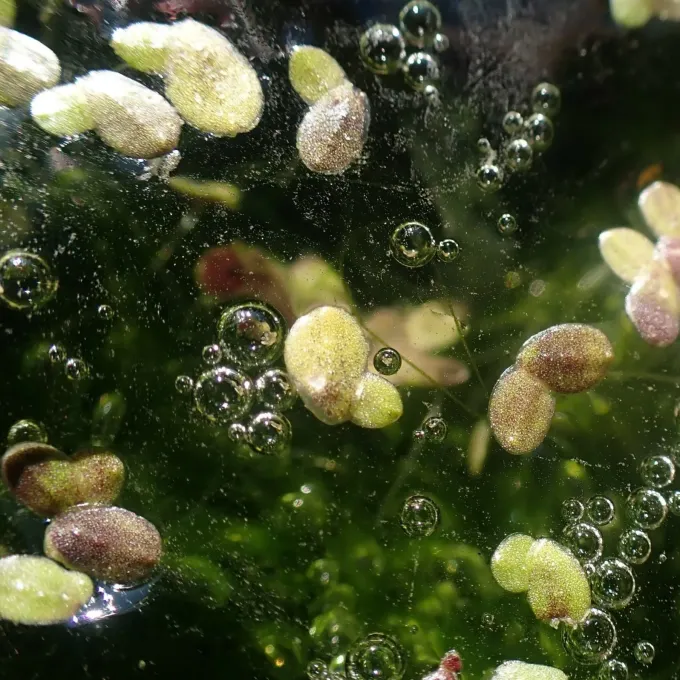
Dark duckweed (Lemna obscura) is a small, free-floating perennial aquatic plant belonging to the Araceae family. Each plant, or frond, is tiny, measuring 2–5 mm in length, and is typically round or oval, often showing a distinct purple pigmentation on the underside.
A key identifying feature of this species is the presence of a single root hanging into the water. The plants usually cluster together to form dense, mat-like colonies that can cover the entire surface of calm water bodies.
The biology of Lemna obscura is defined by rapid vegetative reproduction, where new fronds bud off from the margins of the parent plant. This allows for extremely fast colonization of available surface areas during the growing season.
Flowering in this species is rare and plays a negligible role in its spread. The plant typically survives winter by producing dormant fronds that sink to the bottom of the water body, awaiting warmer temperatures to rise again.
This species is highly adaptable and efficient at nutrient uptake, allowing it to outcompete other floating aquatic plants in eutrophic waters rich in nitrogen and phosphorus.
Where it grows
Dark duckweed is primarily found in still or slow-moving freshwater environments, including ponds, swamps, and irrigation ditches. It thrives in stagnant water where nutrient levels are elevated.
In agricultural settings, it is considered a troublesome weed in rice paddies and irrigation canals. Its ability to proliferate quickly makes it a significant issue for hydraulic engineers and farm managers.
Distribution is facilitated by birds, as the tiny fronds easily adhere to their feathers and feet during flight between water bodies. Furthermore, water movement during floods can transport large quantities of the weed into new areas.
Eutrophication caused by agricultural runoff—specifically nitrogen and phosphorus from fertilizers—creates perfect conditions for Lemna obscura to form massive, choking colonies in irrigation reservoirs.
It remains hardy across various climates, ensuring its presence in both natural waterways and man-made systems, where it disrupts the normal flow and quality of water.
Harm it causes
The primary damage caused by dark duckweed is the mechanical clogging of irrigation infrastructure. Dense mats can block intake screens, filters, and pump stations, leading to significant maintenance costs and operational downtime.
By forming a thick layer on the surface, the weed prevents sunlight from penetrating the water column. This suppresses submerged vegetation and phytoplankton, which are essential for the health of the aquatic ecosystem.
The decomposition of large mats of duckweed can deplete dissolved oxygen levels in the water. This can lead to hypoxia, causing fish kills and threatening the viability of aquaculture and local biodiversity.
In rice production, heavy infestations compete with crops for light and nutrients. This interference can hinder early plant development and lower overall yields in affected paddy fields.
Additionally, the presence of excessive duckweed can negatively alter the physical and chemical water quality, making it less suitable for irrigation and increasing the risk of pathogen accumulation.
How to control
Mechanical control is the most direct approach, involving the manual or machine-assisted skimming of duckweed from the water surface. Using screens to trap the floating plants is effective for protecting pump intakes.
Promoting water flow is a highly effective preventive measure, as Lemna obscura thrives only in stagnant conditions. Maintaining consistent movement in irrigation canals discourages colonization.
Chemical control via aquatic-approved herbicides can be used, but must be strictly managed to comply with environmental regulations and prevent harm to non-target organisms or downstream irrigation needs.
Biological control methods involve the introduction of fish species such as the grass carp (Ctenopharyngodon idella), which are efficient consumers of aquatic vegetation and can naturally regulate duckweed populations.
An integrated approach—combining nutrient management to reduce runoff, periodic mechanical clearing, and water movement optimization—provides the best long-term strategy for keeping this weed under control.
Taxonomy
- Latin name
- Lemna obscura
- Family
- Ароидные
- EPPO code
- LEMOB