
Least duckweed
Lemna minuta
Description
How to tell it apart
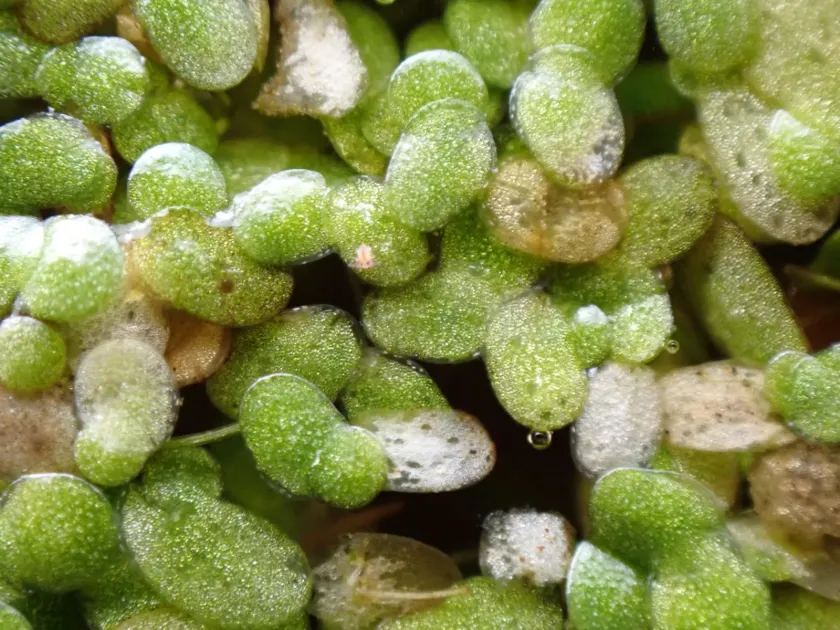
Least duckweed (Lemna minuta) is a tiny aquatic plant belonging to the Araceae family, characterized by its floating habit on water surfaces.
Each plant consists of a small, flattened frond that typically measures between 1 and 3 mm, significantly smaller than other common duckweed species.
A single, thin root hangs down from the center of each frond into the water column, but it does not anchor the plant to the sediment.
The plant reproduces primarily through rapid vegetative budding, where new fronds break away from the parent to form new colonies quickly.
It rarely produces visible flowers, meaning identification is based entirely on its minute vegetative structure and the dense mats it creates.
Where it grows
Least duckweed is commonly found in stagnant or slow-moving freshwater bodies, including ponds, irrigation ditches, and slow-flowing canals.
It thrives in nutrient-rich environments, particularly those impacted by agricultural runoff containing high levels of nitrogen and phosphorus.
The species is highly invasive in many regions, utilizing slow-flowing irrigation networks as primary pathways for spread across agricultural landscapes.
It is sensitive to water chemistry and prefers eutrophic conditions where it can outcompete native aquatic vegetation due to its rapid growth rate.
Dispersal is frequently facilitated by waterfowl, which transport the sticky, minute fronds between different aquatic habitats on their feet and feathers.
Harm it causes
The formation of dense surface mats prevents light penetration, severely disrupting the photosynthesis of submerged aquatic plants and phytoplankton.
As submerged oxygen-producing organisms die off, dissolved oxygen levels plummet, often leading to fish kills and ecosystem collapse in the affected area.
In irrigation systems, the weed causes severe blockages in intake valves, pumps, and irrigation pipes, increasing maintenance costs and operational downtime.
Massive biomass accumulation leads to rapid siltation, as dead plant material settles on the bottom, negatively altering the habitat for aquatic life.
The persistent presence of this weed reduces the overall water quality and complicates the use of water for both irrigation and recreational purposes.
How to control
Mechanical removal, such as the use of booms, screens, and nets to skim the surface, remains the most immediate method for cleaning small water bodies.
Cultural control involves reducing nutrient runoff from surrounding agricultural fields to starve the duckweed of the minerals required for proliferation.
Biological control can be effectively implemented by introducing herbivorous fish, such as grass carp, into contained water systems to graze on the weed.
Chemical control involves the application of aquatic-approved herbicides that target vascular aquatic plants while minimizing impact on fish and wildlife.
- Regular skimming and physical removal.
- Reduction of nutrient inputs from fields.
- Introduction of herbivorous fish species.
- Targeted use of aquatic herbicides.
Taxonomy
- Latin name
- Lemna minuta
- Family
- Ароидные
- EPPO code
- LEMMT