
Spirodela oligorrhiza
Spirodela oligorrhiza
Description
How to tell it apart
Spirodela oligorrhiza is an aquatic perennial plant belonging to the Araceae family. It is often referred to as a type of giant duckweed due to its structural similarity to common duckweed species.
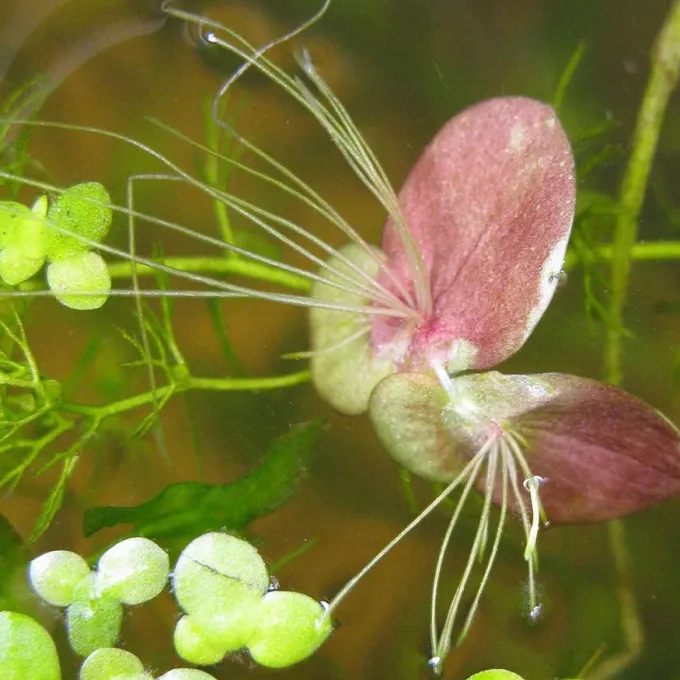
The primary diagnostic feature that separates this plant from other Lemnaceae is the presence of multiple roots (ranging from 5 to 12) hanging from the underside of each frond.
The fronds are elliptical or circular in shape, typically 8-10 mm long. The upper surface is vibrant green, while the ventral side often features a distinct purple or reddish pigmentation.
The plant reproduces primarily through vegetative propagation, producing daughter fronds that quickly cover the water surface in dense, interconnected mats.
Flowering is an extremely rare phenomenon for this species, as the reproductive organs are minute and rarely observed under field conditions, making identification based on morphology essential.
Where it grows
Spirodela oligorrhiza thrives in stagnant or slow-moving freshwater ecosystems, including ponds, irrigation ditches, and slow-flowing canals rich in organic matter.
In agricultural settings, it is a significant weed in paddy fields where the combination of warm water and high nutrient availability provides an optimal environment for rapid growth.
Dispersal primarily occurs via irrigation water, as well as passive transport by waterfowl or through contaminated agricultural machinery used across different water sources.
The species exhibits high ecological plasticity, enabling it to persist in various environmental conditions and recover quickly if water levels fluctuate slightly.
It often occupies the same niche as other duckweed species, forming mixed aquatic plant communities that compete for space and resources with cultivated crops.
Harm it causes
The main negative impact of Spirodela oligorrhiza is the creation of a dense canopy that blocks sunlight, significantly hindering the photosynthesis of submerged rice seedlings.
This light limitation results in stunted growth, delayed tillering, and reduced vigor of the crop, ultimately causing significant yield losses in affected paddy fields.
The matting effect alters the water temperature, preventing the proper warming of the water column which is crucial for the development of heat-loving rice cultivars.
Accumulation of the weed leads to the clogging of irrigation infrastructure, which increases the costs of maintenance and impairs the efficiency of water management systems.
Decomposition of the large weed biomass consumes dissolved oxygen in the water, which can adversely affect the rhizosphere environment and soil chemical properties.
How to control
Cultural control is primarily achieved through precise water management and leveling of the field surface to prevent stagnant water pockets where the weed can establish.
Mechanical management involving the cleaning of irrigation channels and the installation of filtration screens helps prevent the introduction of the plant into the crop area.
Chemical control is effective when using registered aquatic herbicides that provide selectivity, targeting the weed without causing phytotoxicity to the rice plants.
- Application of contact-action herbicides tailored for aquatic weed control.
- Manual removal of dense mats in small-scale or localized infestations.
- Utilization of biological control agents, such as grass carp, in aquaculture or integrated water systems.
An integrated strategy, focusing on preventive maintenance of irrigation networks and targeted herbicide application, is the most effective approach for managing this species.
Taxonomy
- Latin name
- Spirodela oligorrhiza
- Family
- Ароидные
- EPPO code
- SPIOL