
Valdivia duckweed
Lemna valdiviana
Description
How to tell it apart
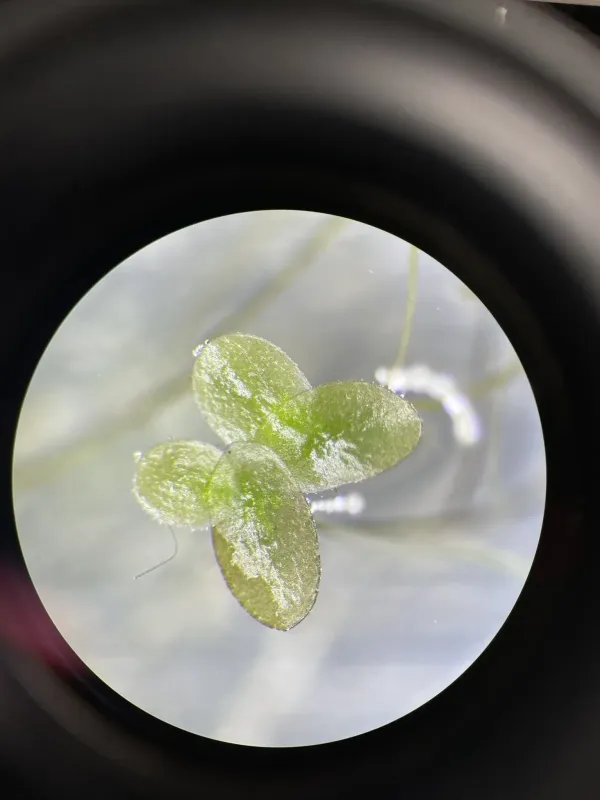
Valdivia duckweed (Lemna valdiviana) is a small aquatic plant belonging to the Araceae family. It is characterized by its distinctively elongated, lanceolate, or elliptical fronds that are tapered at the base.
The plant typically consists of a single small green frond, reaching a length of approximately 5-8 millimeters. A single, thin, unbranched root hangs into the water column from the underside of each frond, allowing the plant to float freely on the surface.
The species is known for its rapid vegetative propagation. New fronds emerge from small pockets on the parent plant, quickly forming dense colonies that cover the water's surface completely.
In mature colonies, individual plants often remain attached to each other, creating characteristic chains or clusters. The surface of the frond is generally smooth and light green, lacking the prominent texture or air cavities seen in larger duckweed species.
Distinguishing Lemna valdiviana from other common species such as Lemna minor requires close observation of the shape: the narrow, symmetrical base is a reliable marker for this specific species.
Where it grows
This weed thrives in still or slow-moving freshwater environments. It shows a strong preference for nutrient-rich, eutrophic waters where nitrogen and phosphorus concentrations support explosive growth.
Typical habitats include drainage ditches, irrigation canals, ponds, and rice paddies. Its ability to tolerate varying water quality makes it a persistent issue in agricultural irrigation systems.
While it prefers warm temperatures above 20°C for optimal growth, the plant is adaptable to various conditions. In temperate regions, it survives the winter by producing turions — dormant buds that settle on the bottom of the water body.
Distribution across different water systems is mainly passive, facilitated by waterfowl, fishing equipment, or water flow during heavy rainfall and flooding events.
The plant's capacity to spread rapidly allows it to dominate confined water bodies, often outcompeting submerged flora for space and nutrients within just a few weeks of favorable weather.
Harm it causes
The primary damage caused by Valdivia duckweed is the development of a thick, mat-like cover on the water's surface. This barrier effectively blocks sunlight from reaching deeper water, suppressing the growth of beneficial phytoplankton and submerged vegetation.
The dense layer of vegetation limits gas exchange at the water-air interface, which can lead to nocturnal oxygen depletion. This condition poses significant risks to aquatic life and reduces the overall biological health of rice paddies.
In rice production, the plant acts as a nutrient competitor. It rapidly consumes nitrogen and other minerals from the water, depriving rice seedlings of necessary nutrients during early developmental stages and ultimately lowering yields.
The presence of large mats impedes proper water warming, which is critical for the development of heat-loving rice varieties. It also disrupts water flow, leading to sediment buildup and increased maintenance costs for irrigation infrastructure.
Furthermore, the physical accumulation of biomass can clog irrigation filters and gates, necessitating frequent mechanical cleaning and disrupting the precise water management required for optimal crop yields.
How to control
Agricultural management begins with physical maintenance. Regular cleaning of irrigation canals and filters prevents the spread of the weed and helps manage its density in controlled agricultural water systems.
Chemical control involves the use of registered aquatic herbicides that are safe for use in rice fields. Timing is crucial, as the best results are achieved when herbicide application occurs during the initial stages of colonization.
Biological control, particularly the introduction of herbivorous fish like the grass carp, is a highly effective long-term strategy for managing duckweed populations in ponds and irrigation reservoirs.
Reducing nutrient loading in the water is a preventive strategy. By managing fertilizer runoff and limiting eutrophication, farmers can significantly reduce the environment's suitability for duckweed propagation.
- Regular mechanical skimming of mats in confined irrigation sections.
- Monitoring irrigation water sources for early infestation.
- Selective application of herbicides during the active growth season.
Taxonomy
- Latin name
- Lemna valdiviana
- Family
- Ароидные
- EPPO code
- LEMVA