

Description
How to tell it apart
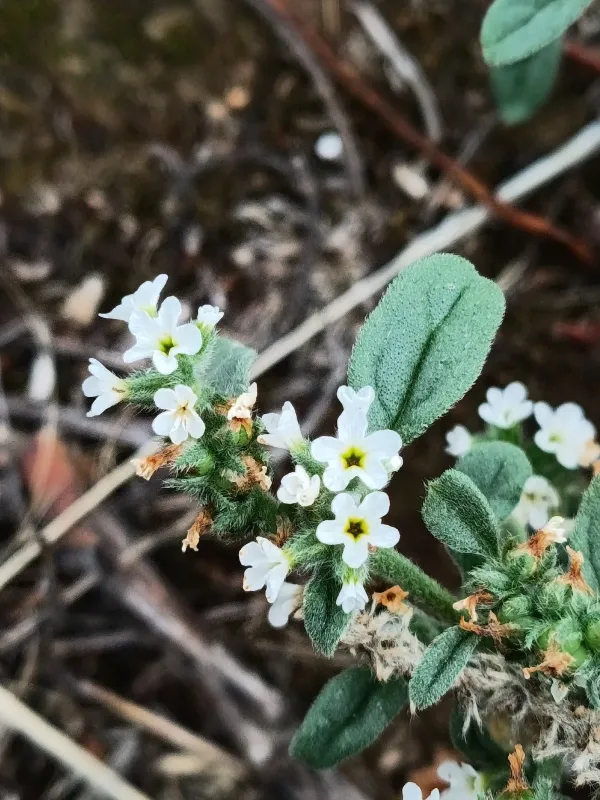
Heliotropium europaeum, commonly known as common heliotrope, belongs to the Boraginaceae family. It is an annual herbaceous plant with a deep taproot and branched stems growing 15–40 cm tall.
The leaves are alternate, elliptical in shape, and possess a grey-green appearance due to dense glandular hairs. The plant produces a distinct and unpleasant odor when crushed.
Small white flowers are arranged in curved, scorpion-tail-like spikes. The fruit consists of four nutlets which detach easily when mature, facilitating the spread of seeds into the soil.
The plant has an extended flowering period from summer through early autumn, allowing it to produce multiple generations of seeds if conditions are favorable.
The seeds of the common heliotrope are highly persistent in the soil seed bank, often remaining viable for several years until tillage brings them to the surface.
Where it grows
This weed is native to Europe and the Mediterranean, thriving in dry, sandy, or disturbed soils. It is frequently found along roadsides, fallow lands, and agricultural fields.
In agricultural settings, Heliotropium europaeum is a common contaminant of various crops, including cereals, corn, soybeans, and horticultural plantings.
It is a heliophilic (sun-loving) and drought-tolerant plant, allowing it to outcompete crops in arid environments where water resources are restricted.
The weed often colonizes field margins and boundaries, which act as reservoirs for seeds to spread into primary production areas via wind, machinery, or water runoff.
In irrigated farming systems, the plant takes advantage of moist soil in inter-row spaces to establish dense populations that can impact crop development significantly.
Harm it causes
Heliotropium europaeum is a well-known toxic plant containing pyrrolizidine alkaloids, including heliotrine and lasiocarpine, which are harmful to livestock.
When ingested by animals through contaminated fodder or hay, these alkaloids cause severe liver damage, often resulting in chronic poisoning and reduced animal health.
In crop fields, the weed competes intensely for nitrogen and soil moisture, leading to suppressed crop growth and reduced overall harvest yields.
Contamination of grain harvests with heliotrope seeds poses a safety risk, as alkaloids can contaminate food chains and animal feed products.
The dense growth of this weed during the late season complicates harvesting operations and often requires post-harvest cleaning of grain to remove toxic contaminants.
How to control
Effective management begins with integrated cultural practices, including consistent crop rotation to disrupt the life cycle of the weed and minimize seed bank build-up.
Deep primary tillage, such as moldboard plowing, is effective for burying seeds deep in the soil, preventing them from germinating successfully.
Mechanical weed control, such as inter-row cultivation in row crops, should be performed before the plant reaches the flowering stage to prevent seed dispersal.
Chemical control involving selective herbicides is a key strategy; application should target young, actively growing seedlings for the most effective results.
Timely monitoring of field perimeters and non-crop areas is essential to remove initial patches of the weed before they spread into the main production fields.
Reference
Connections · Heliotropium europaeum
Most often together:
Marketplace
Products · 1
Biology
Taxonomy
- Latin name
- Heliotropium europaeum
- Family
- Бурачниковые
- EPPO code
- HEOEU