
Bluebur
Asperugo procumbens
Description
How to tell it apart
Bluebur (Asperugo procumbens) is an annual herbaceous weed belonging to the Boraginaceae family. It is easily recognized by its prostrate, trailing, or scrambling stems that can grow up to 80 cm in length.
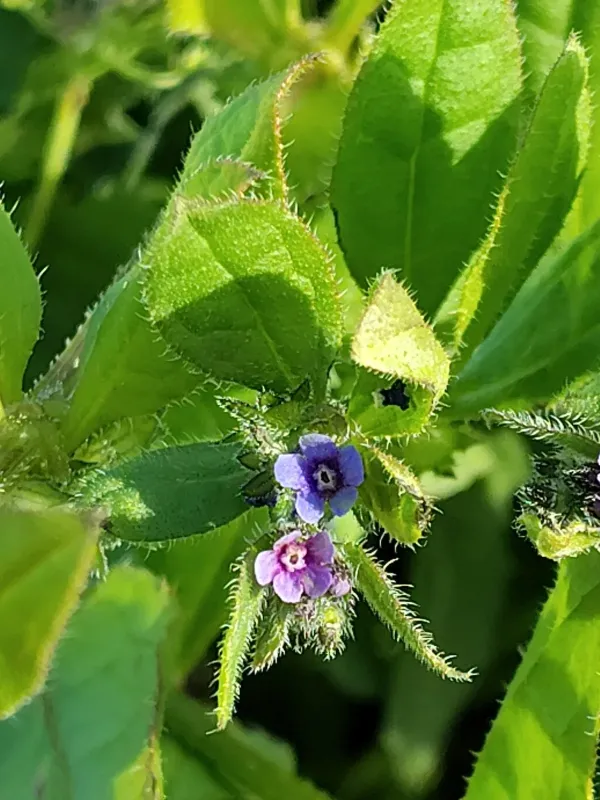
The stems are distinctly quadrangular in shape and covered in stiff, hooked hairs, which allow the plant to cling to clothing, fur, and harvesting equipment.
The leaves are lanceolate or oblong, arranged alternately on the stem or forming a basal rosette in the early growth stages, adding to the plant's structural complexity.
Small, blue to violet flowers emerge from the leaf axils on short pedicels, blooming throughout the spring and early summer period.
The fruit consists of nutlets enclosed in a rapidly enlarging calyx, which is also covered in prickles, facilitating seed dispersal through animal movement.
Where it grows
Bluebur thrives in nitrogen-rich, moist soils and is commonly found in disturbed areas, roadsides, waste grounds, and abandoned agricultural lands.
In agricultural settings, it frequently infests winter cereal crops, as it is well-adapted to germination in cool, moist conditions during the early spring.
It also presents a challenge in perennial forage crops, where its rapid growth rate allows it to outcompete younger plants for sunlight and soil resources.
The weed is highly opportunistic and can establish itself in areas where soil tillage has been insufficient, creating dense mats that cover large surface areas.
It often spreads from field margins into the crop area, aided by the high seed production and effective transport mechanisms provided by its prickly fruits.
Harm it causes
The primary damage caused by Bluebur is its competitive behavior, as it aggressively extracts water and nutrients from the soil, depriving crop plants of essential resources.
The dense vegetative mats created by the weed shade out seedlings, significantly reducing the density and overall health of the main crop during the early growth stages.
Harvesting efficiency is hampered by the plant's rough, prickly texture, which can clog machinery and increase the amount of foreign matter in the harvested grain.
The presence of Bluebur seeds in harvested crops leads to a decrease in seed quality and may result in penalties or extra cleaning costs before the crop can be marketed.
Additionally, the weed can harbor various pests and plant diseases, acting as a reservoir that sustains these threats throughout the growing season.
How to control
Effective control starts with sound agronomic practices, including a well-planned crop rotation that breaks the life cycle of this annual weed.
Deep tillage or moldboard plowing is effective in burying seeds deep into the soil, where they struggle to germinate and eventually lose their viability over time.
Timely cultivation between rows in broad-leaved crops is essential for destroying young Bluebur plants before they reach the flowering stage and produce seeds.
Chemical control involving the use of selective herbicides, such as auxinic compounds, provides effective management when applied at the seedling or rosette stage.
Managing weed growth along field borders and ditches is a critical preventive measure to stop the ingress of seeds into the cultivated areas.
Taxonomy
- Latin name
- Asperugo procumbens
- Family
- Бурачниковые
- EPPO code
- ASGPR