
Judean viper's bugloss
Echium judaeum
Description
How to tell it apart
Judean viper's bugloss (Echium judaeum) is a member of the Boraginaceae family. It is a herbaceous plant known for its hardiness and ability to thrive in poor soil conditions.
The plant features a stiff, upright stem covered with prickly hairs, which act as a defense mechanism against herbivores and reduce water loss through transpiration.
Leaves are lance-shaped, arranged in a rosette or alternate pattern, and possess a coarse texture. This structural adaptation helps the plant survive in dry environments.
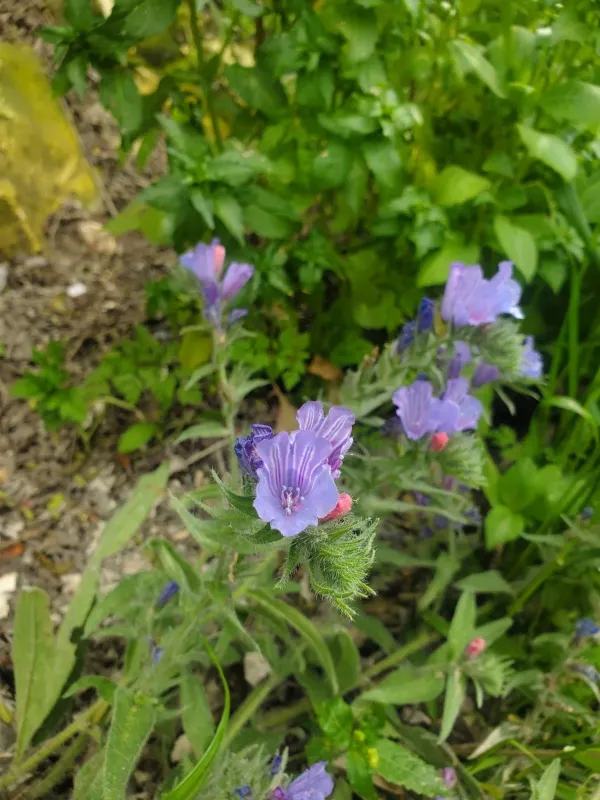
Its inflorescences are distinct coiled spikes bearing blue to purple flowers. These flowers are highly attractive to pollinators, facilitating prolific seed production.
A deep taproot system is a key characteristic, allowing the plant to reach moisture reserves deep underground, ensuring survival during hot, arid periods.
Where it grows
This weed is native to and commonly found in Mediterranean-type climates, particularly in the Middle East, occupying open, sunny, and disturbed land.
In agricultural settings, Judean viper's bugloss often infests cereal fields, legumes, and fallow land where soil disturbance has occurred recently.
It favors rocky or gravelly soils and is frequently spotted along field margins, roadsides, and abandoned pastures, spreading rapidly into cultivated areas.
Its ability to tolerate salinity and low-nutrient soils allows it to colonize regions that are often avoided by more sensitive weeds, making it a persistent agricultural threat.
The species excels in open landscapes where there is little canopy cover, allowing it to take advantage of available sunlight and spread its seeds through wind and animals.
Harm it causes
The primary damage caused by this weed is the intense competition for soil moisture and nutrients, which significantly reduces the vigor and yield of commercial crops.
By establishing itself early in the season, it can outcompete seedlings, leading to reduced plant density and uneven crop stands throughout the field.
The rough, coarse nature of the plant stems interferes with mechanical harvesting operations, potentially causing clogging of machinery and increasing maintenance costs.
As a carrier of certain pests and diseases, it serves as an alternative host that can harbor populations which eventually migrate to main agricultural crops.
The presence of certain alkaloids in the plant tissues renders it unsuitable for livestock forage, potentially leading to quality issues if the weed is harvested with hay.
How to control
Integrated weed management should include strict crop rotation, utilizing competitive cover crops that shade the ground and prevent seed germination.
Deep plowing is highly effective in disrupting the taproot system and burying seeds deep in the soil profile, preventing them from emerging effectively.
Mechanical cultivation between crop rows is essential for removing young weeds before they establish a deep root system or reach the flowering stage.
Chemical control involves the application of selective herbicides, particularly those targeting broadleaf weeds, during the early growth stages of the plant.
- Regular mowing of non-cropped areas prevents the plant from maturing and spreading seeds to the field.
- Pre-emergence herbicide applications can offer residual protection against germinating seeds.
- Monitoring fields during fallow periods ensures that infestations are identified and treated before they proliferate.
Taxonomy
- Latin name
- Echium judaeum
- Family
- Бурачниковые
- EPPO code
- EHIJU