

Description
How to tell it apart
Viper's bugloss (Echium vulgare) is a biennial herbaceous plant belonging to the Boraginaceae family, known for its distinct prickly appearance.
In its first year, the plant grows as a rosette of lanceolate leaves. In the second year, it produces a stout, erect stem reaching up to one meter in height.
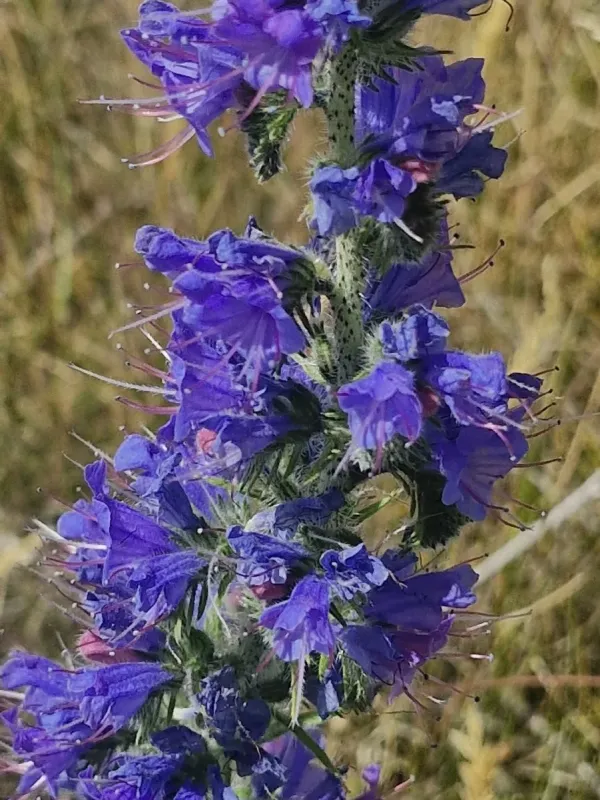
The entire plant is covered in stiff, bristly hairs that often arise from dark spots, giving the stems a mottled or speckled appearance.
The flowers are arranged in scorpioid cymes. They undergo a color change as they mature, typically shifting from pinkish buds to vibrant blue petals.
The root system is a robust taproot that allows the plant to thrive in dry, poor soil conditions where other weeds might fail to establish.
Where it grows
Viper's bugloss prefers dry, well-drained, and sunny environments. It is frequently found in fields, pastures, roadsides, and disturbed waste ground.
In agricultural settings, it can infest grain fields and meadows, often colonizing areas where the soil has been heavily disturbed or is relatively infertile.
Harm it causes
The plant acts as a fierce competitor for soil moisture and nutrients, which is particularly detrimental to crops during periods of low rainfall.
It poses a significant problem in hay production, as the stiff, abrasive hairs can irritate the digestive tracts of livestock if consumed in hay.
Additionally, the plant contains pyrrolizidine alkaloids, which can be toxic to livestock when ingested over long periods, leading to potential herd health issues.
How to control
Mechanical control includes deep cultivation and plowing, which are effective at disrupting the taproot and killing the biennial rosettes before they seed.
Mowing is an essential practice if performed before the seeds mature, as it prevents the replenishment of the soil seed bank for subsequent growing seasons.
Chemical control using systemic herbicides that target broadleaf weeds is highly effective when applied during the early rosette stage of the plant's growth.
Maintaining healthy crop stands through proper fertilization and density management helps to shade out the weed, reducing its ability to establish in the field.
Reference
Connections · Viper's bugloss
Most often together:
Marketplace
Products · 1
Biology
Taxonomy
- Latin name
- Echium vulgare
- Family
- Бурачниковые
- EPPO code
- EHIVU