
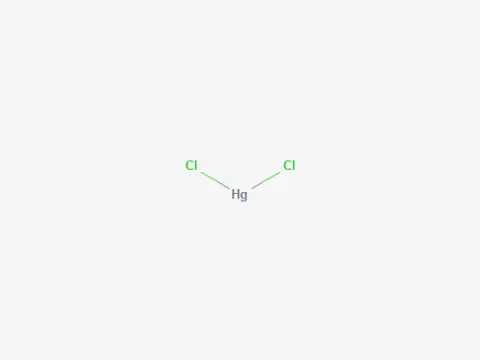
Mercurous chloride
Mercury(I) chloride, traditionally referred to as calomel, is an inorganic compound that historically served as a potent contact fungicide and seed treatment agent in agricultural practices.
What the section contains
Mercurous chloride
The mode of action relies on the ability of mercury ions to bind with sulfhydryl groups of fungal enzymes, disrupting critical metabolic pathways and preventing the germination of spores.
Due to its low solubility, the substance provided a residual protective layer on the surface of treated seeds and soil, effectively creating a barrier against various pathogenic organisms.
The compound directly interferes with the cellular respiration of fungi, causing rapid physiological failure and death of the target mycelium.
Despite its efficacy in protecting seedlings, the chemical's inability to degrade into non-toxic components led to its global phase-out in modern commercial agriculture.
Mercury(I) chloride was employed primarily to combat soil-borne and seed-borne diseases that posed significant threats to crop yield and seedling health.
It was effective against a wide range of phytopathogenic fungi responsible for various forms of root rots and damping-off syndromes.
Common targets included pathogens affecting cereal crops, horticultural varieties, and ornamental plants prone to soil-level infections.
- Fusarium root rot
- Rhizoctonia solani
- Pythium species
- Seed decay
In specialized nurseries, it was sometimes used as a soil disinfectant to ensure a pathogen-free environment for sensitive young plants.
The use of Mercury(I) chloride is strictly prohibited globally under international environmental agreements due to its extreme persistence and toxicity to all living beings.
As a heavy metal compound, it is highly neurotoxic and poses severe long-term risks to human health, including damage to the central nervous system and kidneys.
The substance exhibits significant bioaccumulation potential, meaning it moves up the food chain and causes irreversible damage to ecosystems and water resources.
Strict safety protocols are mandatory for any remaining stocks or waste, requiring disposal as hazardous heavy metal waste under professional supervision.
Modern integrated pest management (IPM) has replaced mercury-based treatments with sustainable, low-toxicity biological and systemic chemical alternatives.