
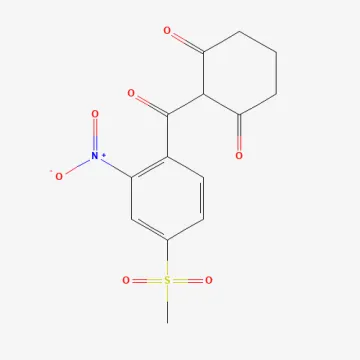
Mesotrione
Description
Mode of action
Mesotrione is a systemic, selective herbicide belonging to the triketone chemical family. It is primarily used to control broadleaf weeds in maize crops, exhibiting excellent physiological selectivity.
The mode of action involves the inhibition of the enzyme 4-hydroxyphenylpyruvate dioxygenase (HPPD). This enzyme is crucial for the synthesis of carotenoids, which are vital for plant survival.
When carotenoids are absent, the chlorophyll in the plant becomes unprotected and is rapidly destroyed by sunlight through a process called photo-oxidation, leading to characteristic plant bleaching.
Weeds treated with mesotrione typically show symptoms of chlorosis and bleaching within 3 to 5 days, with complete death occurring in 1 to 2 weeks, depending on environmental conditions.
The substance also exhibits soil residual activity, providing a protective barrier that helps control subsequent flushes of weed seeds germination in the weeks following application.
What it targets
Mesotrione is highly effective against a broad range of annual broadleaf weeds. It is frequently employed to manage weed species that have developed resistance to other common herbicide groups.
Common target species include pigweed (Amaranthus spp.), common lambsquarters, common ragweed, black nightshade, velvetleaf, and various smartweed species.
The herbicide is most effective when applied to young, actively growing weeds. As it is systemic, it translocates through the plant tissues to reach the active meristems.
In maize production, mesotrione provides critical early-season weed control, ensuring the crop can develop without significant competition for light, water, and nutrients.
It is often used in tank mixtures with other herbicides to provide a broader spectrum of activity, especially when mixed with products targeting grass weeds.
Rates and timing
Applications are typically timed to the growth stage of the corn crop, generally between the V2 and V8 leaf stages, which ensures crop safety while targeting susceptible weed growth stages.
Application rates depend on the weed pressure and environmental factors, typically ranging from 70 to 150 grams of active ingredient per hectare.
To maximize uptake and efficacy, the use of adjuvants or surfactants is highly recommended in the spray mixture, particularly under adverse weather conditions.
Farmers should always adhere to the specific product label requirements regarding the volume of water, spray pressure, and environmental constraints during application.
Optimal results are generally obtained during periods of active plant growth with temperatures ranging from 15 to 25 degrees Celsius, avoiding periods of extreme temperature stress.
Restrictions
While highly selective for corn, mesotrione can cause phytotoxicity if it drifts onto sensitive broadleaf crops. Proper spray equipment maintenance and wind control are essential.
Crop rotation intervals must be respected. Residual levels of mesotrione in the soil may affect sensitive rotational crops, such as certain vegetables, sugar beets, or legumes, in the following season.
Avoid application when the maize crop is under stress (e.g., cold temperatures, drought, or insect damage), as the plant's ability to metabolize the herbicide is reduced.
Safety precautions must be strictly followed when handling the concentrated product, including the use of chemical-resistant gloves, goggles, and protective clothing to prevent skin contact.
Compatibility testing is necessary before mixing with other herbicides or insecticides, as some combinations may interact unexpectedly, leading to reduced efficacy or crop injury.
Status in the European Union
Approved in the EU
- CAS number
- 104206-8
- Approved from
- 01.06.2017
- Approval until
- 31.05.2032
- ADI
- 0.01 mg/kg bw/day
- ARfD
- 0.02 mg/kg bw
- AOEL
- 0.005 mg/kg bw/day
EU status is for reference only and does not replace national registration in your country.