
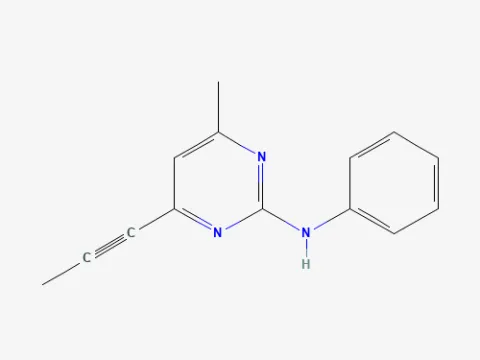
Mepanipyrim
Mepanipyrim belongs to the anilinopyrimidine chemical class. Its primary action is the inhibition of methionine biosynthesis, a critical amino acid required for the survival and growth of fungal pathogens.
What the section contains
Mepanipyrim
By preventing the secretion of hydrolytic enzymes, the substance blocks the infection process. Fungi lose their ability to form appressoria and penetrate the host tissue successfully.
The compound exhibits both curative and preventive properties. It quickly penetrates the leaf cuticle, providing robust resistance against washing off by precipitation.
The active ingredient exhibits translaminar movement within plant tissues, allowing it to protect areas of the plant that did not receive direct spray coverage.
Mepanipyrim maintains high selectivity towards pathogens and does not adversely affect the physiological growth processes of crops when used according to the label.
The primary target for mepanipyrim is the gray mold pathogen Botrytis cinerea, which is highly destructive to vineyards and berry plantations.
It is effective against a wide range of fungal infections, including scab and various leaf spot diseases affecting vegetables in both open and protected ground.
The fungicide is commonly used on tomatoes, cucumbers, strawberries, and stone fruits during the flowering and fruit ripening stages.
Mepanipyrim is successfully used to control resistant strains of fungi that have developed resistance to other chemical classes, such as benzimidazoles.
Regular use helps significantly reduce post-harvest losses by protecting the quality and shelf life of fruits and vegetables.
Application rates depend on the crop growth stage and the infection pressure. Typically, rates range from 0.5 to 1.5 liters per hectare.
The optimal timing for application is a preventive treatment at the beginning of flowering or during periods of high humidity conducive to disease development.
On vineyards, it is recommended to conduct no more than 2-3 applications per season, with an interval of 10–14 days depending on environmental conditions.
Thorough and uniform coverage of leaves and fruit clusters is essential to ensure the maximum efficacy of the translaminar action.
- Always follow the specific instructions on the product label for concentration and application volume.
- Avoid exceeding the maximum number of treatments allowed within a single growing season.
Mepanipyrim is classified as moderately hazardous. Proper personal protective equipment for the skin, eyes, and respiratory system must be used during handling and application.
The substance is toxic to aquatic organisms; therefore, applications near water bodies must be avoided to prevent runoff and contamination.
Do not perform spraying under adverse weather conditions, such as high winds, to avoid drift beyond the target area.
Strictly adhere to the pre-harvest interval (PHI) specified on the product label to ensure food safety and regulatory compliance.
While mepanipyrim is compatible with many insecticides and fungicides, a physical-chemical compatibility test should be performed before preparing tank mixtures.