
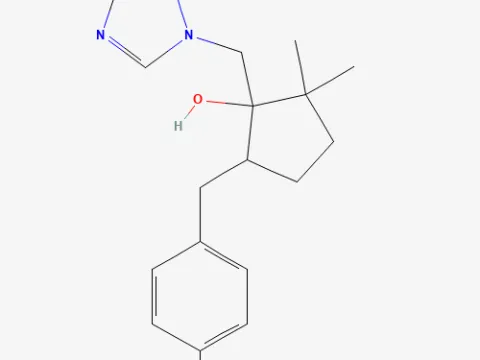
Metconazole
Metconazole is a systemic triazole fungicide that acts by inhibiting the biosynthesis of ergosterol, which is a vital component of fungal cell membranes.
What the section contains
Metconazole
By disrupting the structural integrity of the cell membrane, the fungicide effectively inhibits mycelial growth and prevents the spread of spores, eventually leading to the death of the pathogen.
Beyond its fungicidal properties, metconazole acts as a plant growth regulator, particularly effective in rapeseed (canola) to promote shorter, sturdier stems and better cold tolerance.
The compound is absorbed rapidly by leaves and shoots, exhibiting strong acropetal movement, which ensures the protection of emerging plant tissue after the application.
It remains effective under varying weather conditions, demonstrating excellent persistence and reliability against a wide range of fungal threats in field crops.
Metconazole is extensively used to manage numerous fungal pathogens that compromise crop yield and quality. Key targets include:
- Septoria leaf and glume blotch.
- Rust diseases (leaf, stem, and stripe rust) in cereals.
- Phoma stem canker in oilseed rape.
- Sclerotinia stem rot.
- Powdery mildew across various plant species.
It is specifically highly regarded for its efficacy in controlling Fusarium head blight, which helps minimize the risk of mycotoxin contamination in harvested grains.
Its dual-action nature makes it an essential tool for high-yielding management systems, ensuring the crop remains healthy during critical growth stages.
The fungicide provides both preventative protection against future infections and curative action when applied at the early stages of disease onset.
Application rates depend on the crop type and the severity of the disease pressure, typically ranging from 0.5 to 1.5 liters per hectare.
For cereals, the timing is crucial: applications are recommended from the stem elongation stage through to flowering to protect the flag leaf and the ear.
When used on rapeseed, autumn application helps in regulating plant height and root development, whereas spring application focuses on disease control.
Uniform coverage is essential for the best performance; therefore, water volume should be carefully calculated based on the canopy density of the crop.
Farmers should monitor weather conditions closely, avoiding application during extreme temperatures or high winds to ensure optimal chemical efficacy.
To avoid the development of fungicide resistance, users should follow anti-resistance strategies, including alternating metconazole with other modes of action.
Operators must wear appropriate personal protective equipment (PPE) during handling and mixing to prevent inhalation or dermal contact.
Metconazole can be toxic to aquatic organisms, so it must be applied with buffer zones to protect nearby water bodies from runoff and spray drift.
Consult local regulations and product labels for specific pre-harvest intervals to ensure the harvested crop meets safety and export standards.
Compatibility tests are highly recommended before mixing metconazole with other fertilizers or pesticides to prevent physical incompatibility in the tank.