
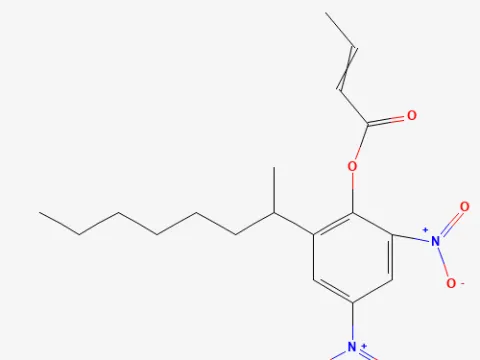
Meptyldinocap
Methyldinocap belongs to the chemical class of dinitrophenols. It is a contact fungicide that also possesses specific acaricidal activity, allowing for the reduction of spider mite populations.
What the section contains
Meptyldinocap
The mechanism of action of this substance is based on the uncoupling of oxidative phosphorylation processes in the pathogen's cells. This leads to the cessation of ATP synthesis, causing the death of fungal spores and mycelium.
The active ingredient is characterized by both protective and eradicative effects. It disrupts metabolic processes within fungal cells, preventing the normal development of infection on the treated plant surface.
Due to its lipophilic nature, methyldinocap adheres well to the leaf surface, providing a prolonged period of protective action against disease pathogens.
The product acts on a wide range of the pathogen's enzyme systems, making the development of resistance in fungal populations less likely compared to narrow-spectrum fungicides.
The primary use of methyldinocap is the control of powdery mildew fungi on various agricultural and horticultural crops.
The substance effectively suppresses diseases such as American gooseberry mildew, grape oidium, apple and peach powdery mildew, as well as vegetables in open and greenhouse conditions.
In addition to its fungicidal properties, the active ingredient exhibits activity against spider mites, making it a useful tool in integrated orchard protection schemes.
- Powdery mildew pathogens (Erysiphales).
- Spider mites (Tetranychidae).
- Rust fungi (on certain crops).
Applying the product allows for the simultaneous mitigation of the infectious background and the control of harmful mite density within the plantations.
Application rates for methyldinocap depend on the severity of infestation and the specific crop species, typically ranging from 0.5 to 1.5 kg of active ingredient per hectare.
Treatments are carried out during the vegetation period upon the appearance of the first visual signs of disease or preventively if weather conditions favor the development of powdery mildew.
The number of treatments per season is limited by ecological requirements and regional regulations to prevent the accumulation of residues in the final produce.
A crucial requirement is thorough wetting of the leaf surface, as the fungicide is primarily contact-based and does not move significantly through the plant's vascular system.
Working solutions should be prepared immediately before application, ensuring uniform distribution of the product using properly functioning spraying equipment.
Methyldinocap is a moderately toxic substance to humans and warm-blooded animals, so handling it requires the use of personal protective equipment.
Treatments during the flowering period of melliferous plants are prohibited, as the substance can be dangerous to bees and other beneficial pollinating insects.
When using the product, it is essential to strictly observe pre-harvest intervals, which are established based on the degradation rate of the active component.
The substance is not recommended to be mixed with highly alkaline products, as this may lead to chemical degradation of the active ingredient and loss of efficacy.
Disposal of containers and remaining working solution must be carried out in strict accordance with environmental legislation to prevent contamination of water bodies and groundwater.