
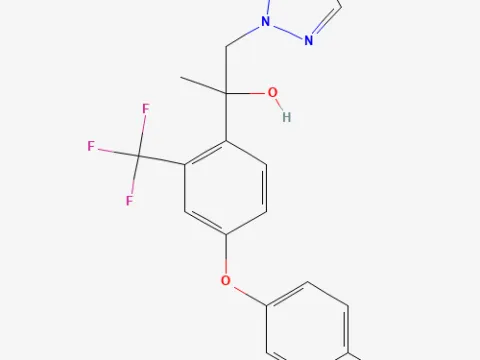
Mefentrifluconazole
Mefentrifluconazole belongs to the chemical class of triazoles, specifically the innovative isopropanol-azole subgroup. It was developed to address the growing concern of pathogen resistance to traditional azole-based fungicides.
What the section contains
Mefentrifluconazole
The mode of action involves the inhibition of the 14-alpha-demethylase enzyme, which is critical for the biosynthesis of ergosterol in fungal cell membranes. Without this component, the integrity of the pathogen cell wall is compromised, leading to its death.
The molecular structure of mefentrifluconazole allows it to bind effectively to the target enzyme even in cases where the pathogen has developed structural modifications to the binding site, making it highly potent against resistant strains.
The compound exhibits strong systemic activity, being absorbed rapidly into plant tissues and transported acropetally. This ensures that both treated leaves and new growth are protected from future infections.
It remains stable under various environmental conditions and shows excellent rainfastness, which is essential for maintaining efficacy during unpredictable weather patterns in the growing season.
Mefentrifluconazole is highly effective against a broad range of fungal pathogens, including those from the Ascomycete, Basidiomycete, and Deuteromycete classes. It is primarily used for the protection of cereal crops, maize, fruit trees, and vegetables.
The fungicide provides robust control over diseases such as leaf blotch (Septoria), various rust species, tan spot, and powdery mildew, which are major threats to crop yield and quality.
In maize production, it is widely recognized for its ability to control helminthosporium leaf blight and Fusarium ear rot, significantly reducing mycotoxin contamination in harvested grain.
Furthermore, it has shown high activity against leaf spotting fungi like Ramularia and Cercospora, which often lead to premature senescence and loss of photosynthetic area in crops.
- Septoria leaf blotch (Septoria tritici)
- Rust diseases (Puccinia spp.)
- Tan spot (Pyrenophora tritici-repentis)
- Powdery mildew (Erysiphe graminis)
- Fusarium ear rot (Fusarium spp.)
Application rates for mefentrifluconazole vary depending on the target crop, disease pressure, and the concentration of the active ingredient in the formulated product. Generally, rates range from 0.5 to 1.5 liters per hectare.
The best time to apply is at the onset of initial disease symptoms or as a preventive treatment during critical growth stages to maximize the protection of leaf layers and reproductive structures.
Ensuring thorough coverage is crucial for optimal results; therefore, using calibrated spraying equipment and proper water volume is recommended to reach all parts of the canopy.
To prevent the development of resistance in fungal populations, it is advised to limit the number of applications per season and rotate with fungicides possessing different modes of action.
Mefentrifluconazole is compatible with many tank-mix partners, such as insecticides and growth regulators; however, a physical compatibility test should be performed before large-scale application.
Strict safety protocols must be followed during handling, including the use of appropriate personal protective equipment (PPE) such as gloves, eye protection, and respiratory gear to prevent exposure.
Pre-harvest intervals (PHI) must be strictly observed to ensure that chemical residues in the crop remain within legal limits, as defined by local regulatory standards.
The product should not be applied near water bodies or sensitive ecological areas to avoid potential toxicity to aquatic organisms and non-target beneficial insects.
Storage should be confined to original, sealed containers in a cool, dry, and well-ventilated area, away from food, animal feed, and unauthorized persons or children.
When planning field applications, weather forecasts and wind conditions must be monitored to minimize spray drift and prevent contamination of neighboring fields or sensitive environments.