
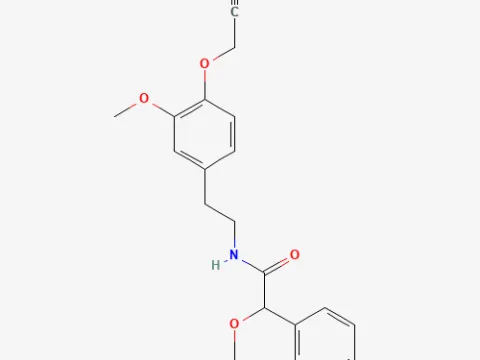
Mandipropamid
Mandipropamid belongs to the carboxylic acid amide chemical class (mandelemide subclass). It is a highly effective fungicide with both curative and preventive action.
What the section contains
Mandipropamid
The substance affects disease pathogens by inhibiting the enzymes responsible for cellulose synthesis in the fungal cell wall. This leads to the cessation of mycelial growth and prevents the spread of pathogen spores.
Due to its high lipophilicity, mandipropamid binds firmly to the wax layer of leaves shortly after application. This provides exceptional resistance to wash-off by precipitation.
The preparation possesses translaminar activity: upon contact with the upper side of the leaf, it penetrates the tissues and protects the untreated underside as well.
The substance does not have systemic action in the classical sense; however, the redistribution of the product on the leaf surface and its resistance to environmental factors allow for effective protection of new growth.
Mandipropamid is a specialized agent against oomycetes. Its primary spectrum of activity is aimed at controlling late blight and downy mildew.
The product is extremely effective against Phytophthora infestans, which affects potatoes and tomatoes. It prevents both the germination of zoospores and the development of mycelium inside plant tissues.
The substance is also successfully used to protect open-field and greenhouse vegetable crops from various types of downy mildew, including infections on cucumbers, onions, and lettuce.
The agent is recommended for use in crop protection programs where high-quality marketable produce is required, as it minimizes the risk of primary infections.
- Late blight in potatoes and tomatoes
- Downy mildew in cucumbers
- Downy mildew in onions
- Grapevine downy mildew (Plasmopara viticola)
Application rates of mandipropamid depend on the crop type and the level of infection pressure. Typically, the working concentration in the solution ranges from 0.2 to 0.6 liters per hectare depending on the formulation.
It is recommended to start treatments preventively before the first visual signs of the disease appear. During periods favorable for late blight development, the interval between sprays is 7–10 days.
An important requirement is uniform coverage of the leaf surface with the working solution. For high-quality protection, it is recommended to use modern nozzles that ensure fine spray distribution.
Pre-harvest intervals (PHI) usually vary from 5 to 14 days, depending on the specific legal requirements for different crop types.
The number of treatments per season should not exceed 3-4 times to eliminate the risk of pathogen resistance to this chemical group.
Mandipropamid requires strict adherence to application guidelines. Exceeding the permitted number of treatments is not allowed, as this promotes the emergence of resistant pathogen strains.
To prevent the development of resistance, agronomists strongly recommend rotating mandipropamid with fungicides that have different modes of action (e.g., copper-based or cymoxanil-based products).
The product is moderately toxic to aquatic organisms, so protective buffer zones near water bodies must be maintained during application to avoid spray drift to neighboring areas.
When handling the substance, it is necessary to use personal protective equipment for the respiratory tract, skin, and eyes. Eating and smoking during the spraying process are strictly prohibited.
Storage should be in original packaging in dry, cool warehouses, inaccessible to children and animals, and away from food and feed products.