
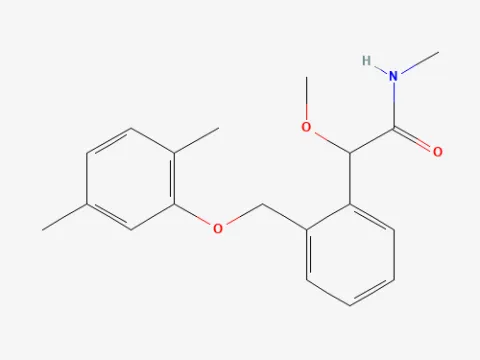
Mandestrobin
Mandestrobin belongs to the strobilurin chemical class and acts as a modern active ingredient with potent fungicidal properties. It effectively blocks mitochondrial respiration in fungal cells by inhibiting the activity of complex III within the respiratory chain.
What the section contains
Mandestrobin
By suppressing the electron transport process in the pathogen's cells, the substance prevents ATP synthesis, which leads to the rapid death of fungal spores and mycelium. This mode of action makes it a powerful tool for resistance management programs.
The compound demonstrates strong protective and curative properties, preventing spore germination and the development of germ tubes on the leaf surface. High penetrative ability ensures reliable crop protection even under unfavorable weather conditions.
The product is quickly absorbed by the plant's waxy layer, significantly reducing the risk of being washed off by precipitation. This feature allows it to maintain fungicidal activity for a prolonged period following application.
Mandestrobin can be effectively combined with other classes of fungicides, which broadens the spectrum of controlled diseases and enhances the overall agronomic impact across various plant growth stages.
The primary use of mandestrobin is for controlling a wide range of fungal diseases caused by ascomycetes, basidiomycetes, and oomycetes. It shows high efficacy against various types of rots and leaf spots.
Application is most frequently targeted against powdery mildew, which can cause significant yield losses across many agricultural crops.
Mandestrobin also effectively manages the development of gray mold (Botrytis cinerea), which is particularly dangerous during the ripening period of fruits and berries, impairing both commercial quality and shelf life.
The fungicide is used to control anthracnose, which affects both vegetative parts and the fruit itself, a critical aspect for protecting high-value specialty crops.
Utilizing this agent helps significantly reduce yield losses while maintaining plant vigor under stress conditions during the growing season.
Timing for mandestrobin application is typically aligned with active crop growth stages or the initial onset of disease symptoms. The optimal strategy is preventive protection before widespread spore dispersal.
Application rates are determined based on the target disease spectrum, infection intensity, and the biological requirements of the specific crop being treated.
To prevent the development of resistant fungal populations, it is strongly recommended to rotate fungicides with different modes of action within a comprehensive protection program.
The number of applications per season is strictly regulated by the manufacturer and local standards to avoid the accumulation of chemical residues in the final produce.
When preparing the spray solution, it is essential to ensure precise dosage and even distribution across the entire leaf surface to achieve maximum coverage and protection.
The main limitation when using mandestrobin is the mandatory adherence to pre-harvest intervals (PHI) established for specific crop types to ensure food safety.
Usage is not recommended during periods of extreme heat or low atmospheric humidity, as these conditions may reduce the overall efficacy of the fungicidal treatment.
Users must consider potential toxicity to aquatic life; therefore, the disposal of leftover spray solution into water bodies or drainage systems is strictly prohibited.
Personal protective equipment (PPE) is mandatory when handling any products from this group to avoid skin contact or inhalation of the concentrate.
Before widespread application, testing for compatibility with other agrochemicals is advised, as specific adjuvants or fertilizers may interfere with the stability of the mixture.