
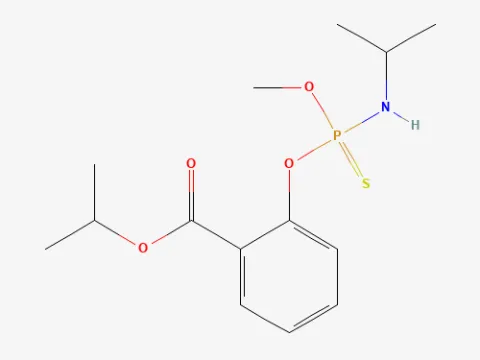
Isofenphos-methyl
Isofenphos-methyl is a chemical substance belonging to the organophosphate class of insecticides and acaricides used for agricultural pest management.
What the section contains
Isofenphos-methyl
The primary mechanism of action involves the inhibition of the acetylcholinesterase enzyme, which leads to the disruption of the insect's nervous system, causing paralysis and death.
It acts primarily through contact and ingestion, making it highly effective against a wide array of insects that either crawl on plant surfaces or feed on plant tissues.
The compound often exhibits systemic properties, which allow it to be absorbed by roots or plant tissues, providing a degree of internal protection against feeding pests.
Its effectiveness against various species makes it a reliable tool for managing pest populations, especially those that have developed resistance to pyrethroid or carbamate insecticides.
Isofenphos-methyl is effective against a broad spectrum of agricultural pests, primarily focusing on those that cause damage to roots and subterranean parts of plants.
It is widely used to control soil-dwelling insects such as wireworms, grubs, and other coleopterous larvae that can decimate young crops during germination and early development.
The insecticide also targets various foliar pests, including mites, aphids, and thrips, which are common threats to vegetable and field crop production.
Due to its chemical properties, it is effective against cryptic pests that reside in bark, root collars, or dense foliage where standard contact sprays may fail to reach.
Common applications include field crops like corn, sugar beets, and potatoes, as well as various greenhouse vegetables where soil-borne pest pressure is significant.
Application rates for Isofenphos-methyl are strictly determined by the specific crop type, the targeted pest species, and the chosen method of chemical delivery.
Soil application typically requires precise placement, often through furrow treatment at the time of planting to ensure the protection of the root zone during the establishment phase.
Timing of applications is critical and should be aligned with the pest's life cycle and local threshold levels to maximize efficacy and minimize the number of required applications.
Adherence to the maximum number of applications per growing season is necessary to prevent the buildup of chemical residues and reduce the selection pressure for resistance.
It is essential to observe the pre-harvest interval (PHI) carefully, as mandated by local regulatory authorities, to ensure that the final produce is safe for consumption.
Isofenphos-methyl is toxic to mammals and requires the use of appropriate personal protective equipment (PPE) during handling, mixing, and application to avoid exposure.
The substance poses significant risks to non-target organisms, particularly bees and other pollinators, necessitating a ban on applications during bloom periods.
Environmental precautions must be taken to prevent contamination of water bodies, as the product can be hazardous to aquatic life and fish populations.
Proper storage is mandatory, requiring cool, dry, and locked facilities that prevent access by unauthorized personnel, children, or domestic animals.
Disposal of empty containers and unused chemical batches must follow strictly regulated environmental guidelines to prevent long-term soil and water pollution.