
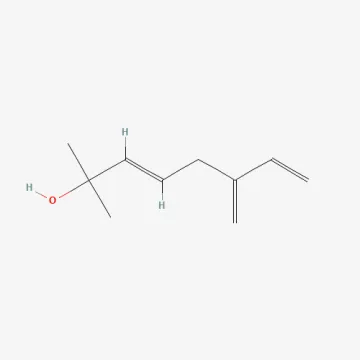
Isomyrcenol
Description
Mode of action
Isomyrcenols represent a class of organic terpenoid compounds that act as signaling molecules or attractants in agronomic practice. Unlike systemic pesticides, they do not exert direct toxic effects on pathogens, but instead activate the natural defense mechanisms of agricultural crops.
Their mechanism of action is based on altering the plant's biochemical response to environmental stresses. By penetrating plant tissues, substances in this group stimulate the production of phytoalexins, which makes the plant less susceptible to external pest attacks or the development of fungal spores.
The application of products based on this group promotes the strengthening of plant cell walls, creating a mechanical barrier against pathogen penetration. This process is physiologically mild and does not cause developmental depression in cultivated plants.
These substances act primarily systemically, rapidly redistributing through the plant's vascular system. This ensures a long-lasting protective effect, as the active component maintains a high level of immune response for several weeks after treatment.
The biological efficacy of isomyrcenols is highly dependent on the plant's phenophase and temperature conditions. Optimal effects are achieved when treatments are carried out during periods of active sap flow and metabolic activity.
What it targets
This group of substances is most often used as a component of integrated pest management strategies against a wide range of phytophages. Its primary use is to disrupt pest orientation during periods of mass migration or egg-laying.
Efficacy has been noted in controlling insects that use volatile pheromone signals to locate mates. Using isomyrcenols allows for a reduction in pest population levels without relying on harsh contact-type insecticides.
They are applied to various crops, including:
- Cereal crops (wheat, barley).
- Industrial crops, including sunflowers and rapeseed.
- Fruit and berry plantations (apples, grapes).
- Open-field and greenhouse vegetable crops.
Additionally, isomyrcenols can be used to reduce the overall pesticide burden, acting as synergists for biological control agents. They help improve crop adaptability to conditions of drought or excessive moisture.
In field conditions, products of this group are successfully used for the prevention of stem-boring pests, which are difficult to control with conventional contact-action chemicals.
Rates and timing
Application rates for isomyrcenols are strictly regulated by the instructions for each specific product and depend on the crop's growth stage. On average, for field crops, the concentration of the working solution ranges from 0.2 to 0.5 liters per hectare.
Treatment timing is tied to monitoring pest population levels. It is important to perform spraying during morning or evening hours to minimize the risk of the active component evaporating under direct sunlight.
To achieve maximum efficacy, it is recommended to maintain an interval of 14–21 days between treatments. This helps maintain the necessary concentration of the substance within plant tissues throughout the entire critical development period.
Isomyrcenol-based products can be mixed with most modern fungicides and insecticides. However, before preparing a tank mix, a test for physical and chemical compatibility of the components is mandatory.
Exceeding recommended application rates may cause phytotoxicity, resulting in temporary growth retardation. In such cases, agronomists recommend applying anti-stress products based on amino acids.
Restrictions
When working with products in this group, standard safety measures adopted for agrochemicals must be observed. The use of personal protective equipment for skin, respiratory tract, and eyes is mandatory.
Treatment near water bodies and apiaries is prohibited. Despite their relative safety for beneficial entomofauna, the concentration of active ingredients in catchment areas must be strictly limited by regulations.
Products must be stored in dry, ventilated warehouse facilities, protected from direct sunlight and freezing temperatures. Expiration dates must be strictly observed to ensure the stability of the formulation.
In case of skin or mucous membrane contact with the concentrate, the affected area must be immediately flushed with plenty of running water. Professional medical assistance should be sought if necessary.
Disposal of packaging and product residues must be carried out in accordance with current environmental legislation. It is strictly forbidden to discharge unused residues into drainage systems or public sewage systems.
Status in the European Union
Not approved in the EU
EU status is for reference only and does not replace national registration in your country.